
Table of Contents
Most people who ask how to properly sit at a computer are really asking why their neck, back or wrists hurt by mid-afternoon. The cause is usually the setup, not the person: a chair that is too low, a screen that is too far away or a keyboard that sits too high. This guide shows how to properly sit at a computer in six steps and how to adjust your office workstation so a good position is easy to keep.
How to Properly Sit at a Computer: What to Do First
Sit back in the chair so your lower back is supported, rest your feet flat on the floor or a footrest and keep your thighs roughly level. Let your shoulders drop, hold your forearms about parallel to the floor with straight wrists, and place the screen directly in front of you at about an arm’s length, with the top at or slightly below eye level. Then change position often, because no single posture suits a whole working day.
The Mayo Clinic’s office ergonomics guide gives the same core advice: arrange the chair, keyboard and monitor so your body stays supported, and get up and move regularly instead of staying fixed in one position.
Why Sitting Posture Matters at a Computer
Knowing how to properly sit at a computer is not about perfection; it is about removing avoidable strain. Computer work means long stretches with very little movement. When the setup makes you reach, twist or tilt your head, small strains build up, and discomfort in the neck, shoulders, back and wrists becomes common. Good posture cannot remove every risk, but it removes the avoidable strain and makes a long day easier. Our article on why your back hurts at work explains how everyday habits add to this, and the hidden costs of bad seating looks at what it means for a business.
If you already have persistent pain, numbness or tingling, speak to a qualified health professional. A furniture guide cannot diagnose or treat a medical problem.
Step-by-Step: How to Properly Sit at a Computer
Step 1: Start with the chair
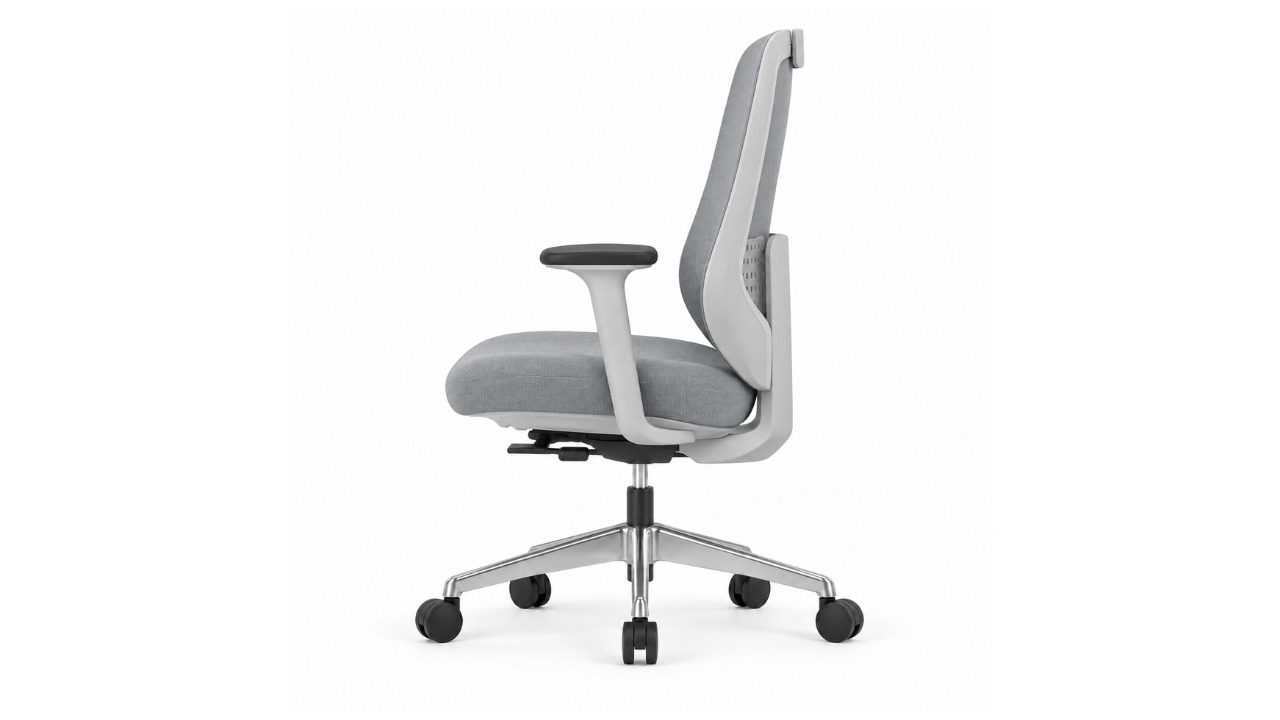
To begin with how to properly sit at a computer, sit all the way back so the backrest supports your lower back. Adjust the seat height until your feet rest flat on the floor, and use a footrest if the desk height cannot change. Your thighs should be roughly parallel to the floor, with a small gap between the front of the seat and the back of your knees. If the chair has adjustable lumbar support, set it where it fills the natural curve of your lower back. Our guide to the key features to look for in office chairs explains which adjustments matter most.
Step 2: Position your arms and shoulders
The next part of how to properly sit at a computer is arm support. Adjust the armrests, if the chair has them, so your arms rest lightly with your elbows close to your body and your shoulders relaxed. If the armrests push your shoulders up or stop the chair from fitting under the desk, lower them or remove them. Armrests should support your arms, not hold them in a raised position.
Step 3: Place the keyboard and mouse
Hands and wrists come next when you work out how to properly sit at a computer. Keep the keyboard directly in front of you with the mouse close beside it, so you do not reach to one side. Your wrists should stay straight, not bent up or down, and your hands should sit at or just below elbow height. A hard desk edge can press on the wrists, so avoid resting them there for long periods. Keeping cables tidy also helps, and options such as a cable grommet or flexi spine cable management keep leads out of your way.
Step 4: Set the screen height and distance
This is the step most people skip when learning how to properly sit at a computer, yet it has the biggest effect on the neck. Place the screen about an arm’s length away, directly in front of you. The top of the screen should be at or slightly below eye level, so you look slightly down rather than craning up. A monitor arm or stand makes this easier. Laptop users usually need a separate keyboard and a laptop stand, because one device cannot put both the screen and the hands in a comfortable position.
Step 5: Check the space under the desk
Good posture also depends on the space around you, so you need room for your legs and feet. Avoid storing boxes or equipment under the desk, because that forces you to sit at an angle. If the desk is too high and cannot be changed, raise the chair and add a footrest. The desk size guide and the notes on how desk placement affects comfort help you check depth, width and position.
Step 6: Reduce glare and eye strain
The final part of how to properly sit at a computer is the light around you. Place the screen so windows are to the side, not directly behind or in front of it. Adjust brightness to suit the room, and look away from the screen regularly. A well-lit room with sensible blinds matters as much as the monitor itself.
A Quick Posture Checklist
This list summarises how to properly sit at a computer. Use it to check your setup in under a minute, and if one item fails, fix it before you move on to the next.
- Feet supported and flat, with thighs roughly level.
- Lower back touching the backrest.
- Shoulders relaxed, not raised toward the ears.
- Elbows close to the body, forearms roughly parallel to the floor.
- Wrists straight when typing and using the mouse.
- Screen an arm’s length away, top at or slightly below eye level.
- Frequently used items within easy reach.
Common Sitting Mistakes and How to Fix Them
Most posture problems come from a few repeated setup errors. This table shows what to look for when you review how to properly sit at a computer in your own workspace.
| Mistake | What usually causes it | Simple fix |
|---|---|---|
| Leaning forward toward the screen | Screen too far away or text too small | Move the screen closer and enlarge the text |
| Craning the neck upward | Screen too high | Lower the monitor so its top is at eye level |
| Dangling feet | Desk too high for the chair | Add a footrest or adjust the chair |
| Bent wrists | Keyboard too high or too far | Lower the keyboard and keep it close |
| Slouching | No lower back support | Adjust lumbar support or add a cushion |
| Staying still for hours | Work habits | Stand up and move regularly |
The Role of Your Furniture
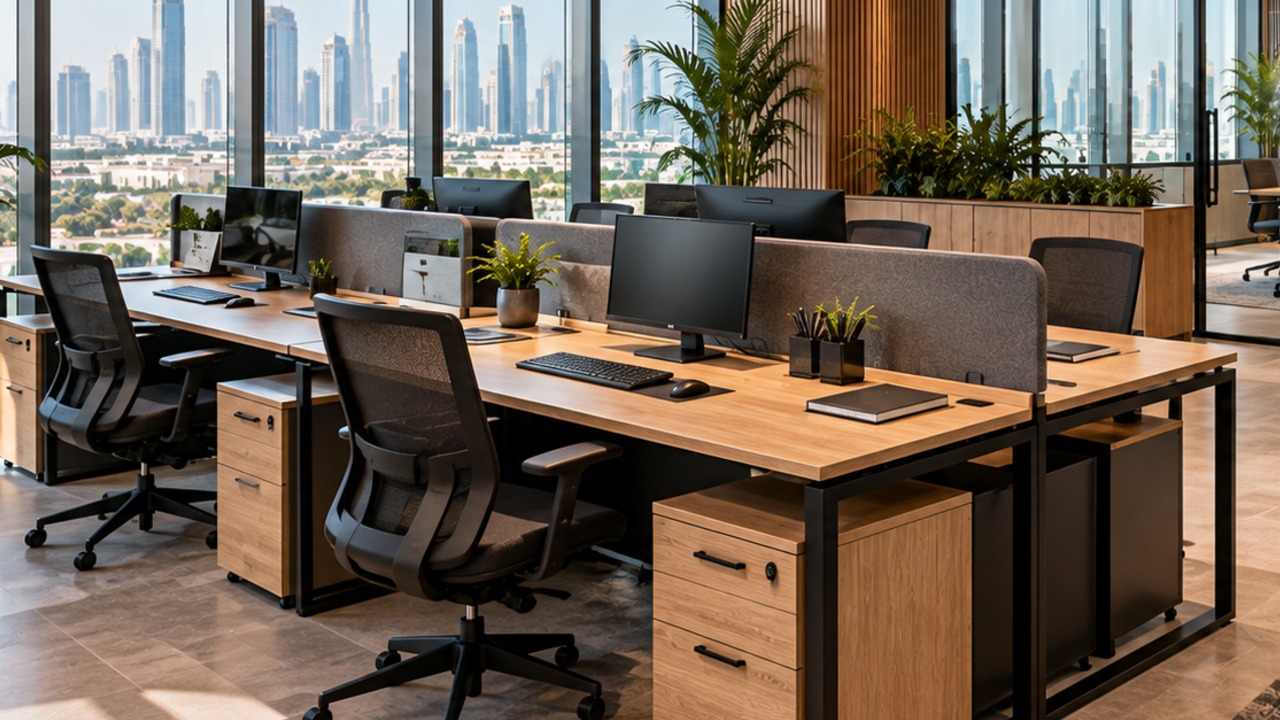
You can only adjust as much as your furniture allows. A fixed-height chair with no lumbar support limits what you can change, and a desk that is too high makes a good position hard to hold. That is why the right furniture is part of learning how to properly sit at a computer. Our guide to choosing ergonomic office furniture and the page on office ergonomics in Dubai look at the desk and chair together, while ergonomic furniture and health explains the wider benefits.
For breathable, supportive seating, read about the benefits of mesh chairs and how office chairs affect performance. If your desk height does not suit you, a height adjustable desk lets you set the right height, and our article on how to choose a sit-stand desk explains what to check before buying.
Furniture That Helps You Sit Properly
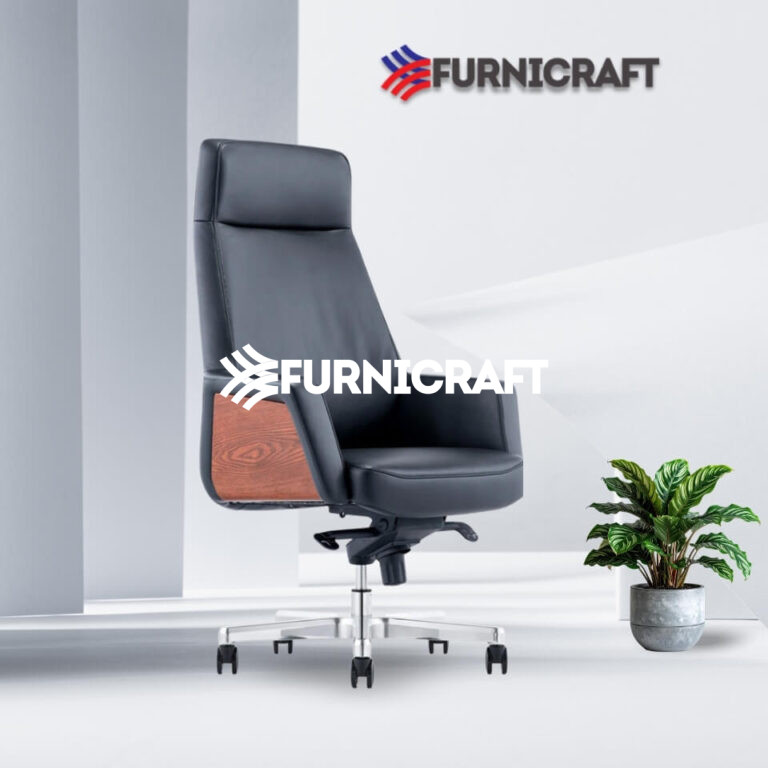
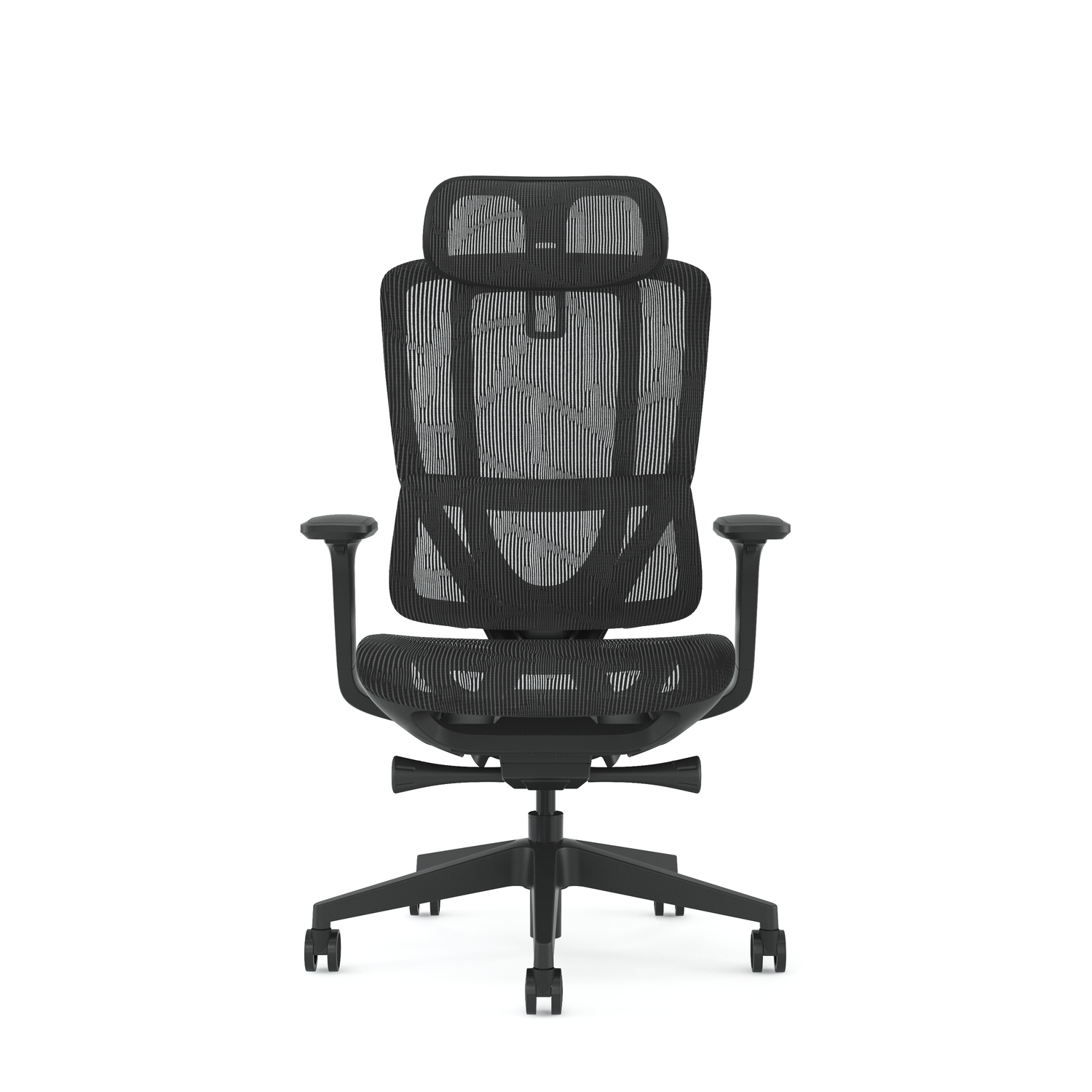
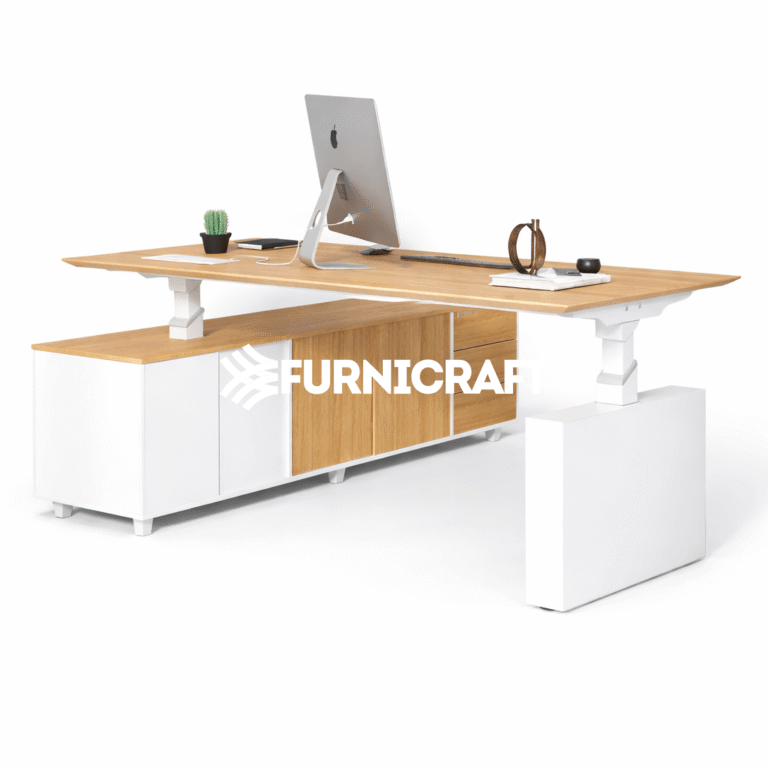
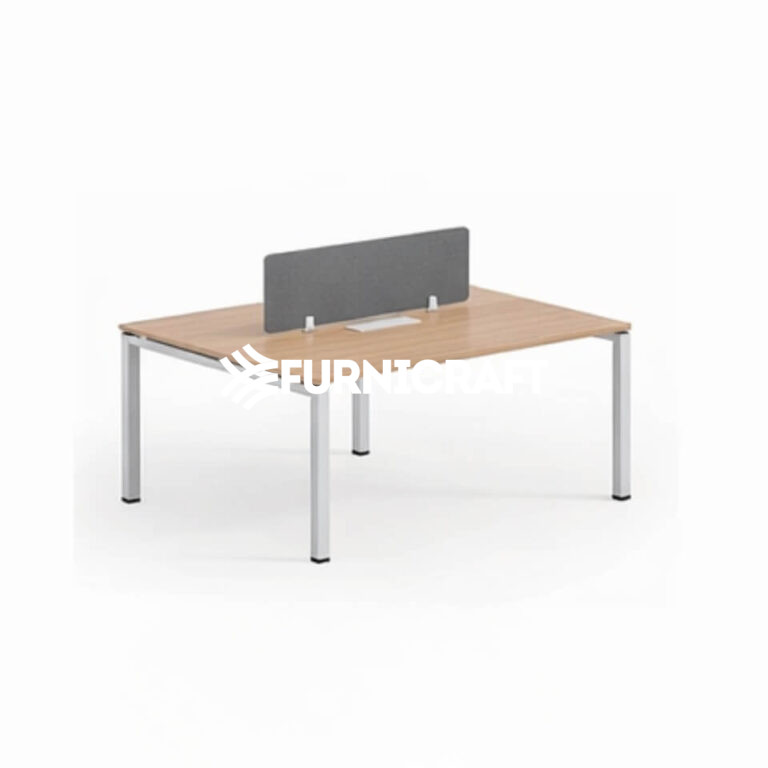
These Furnicraft ranges make it easier to put how to properly sit at a computer into practice.
Setting Up a Shared or Hybrid Workstation
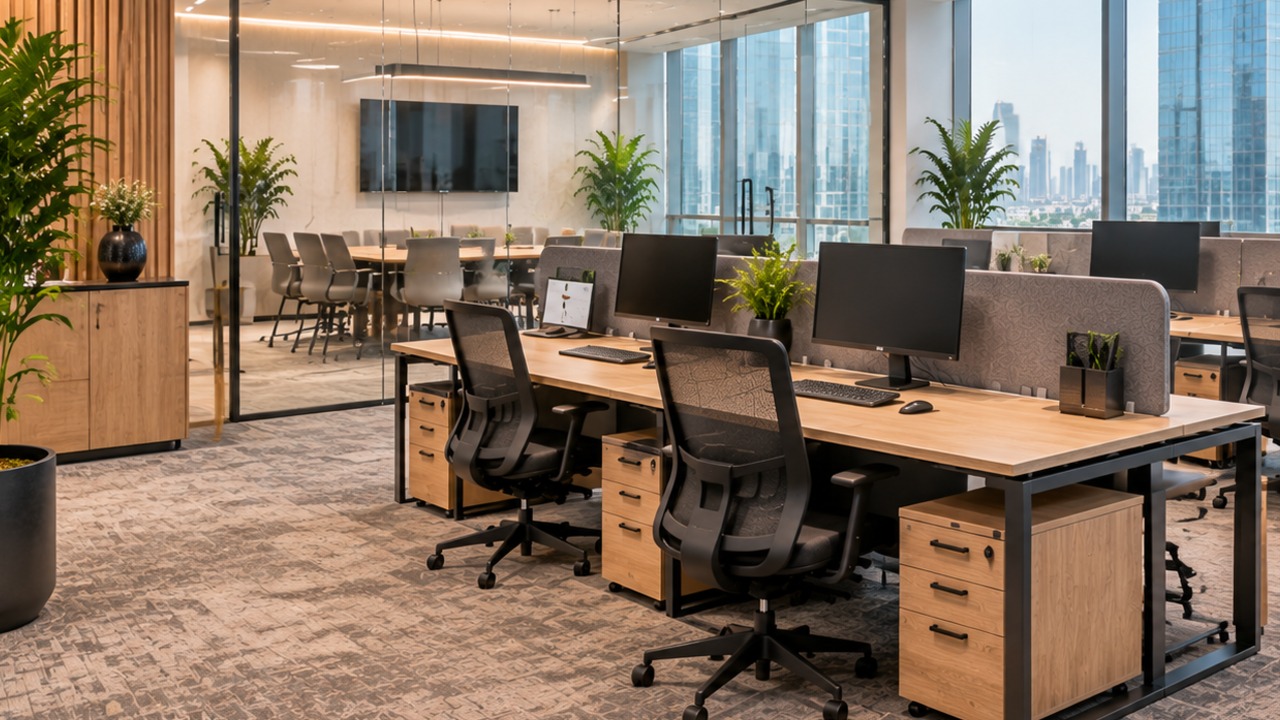
Showing colleagues how to properly sit at a computer is easier when the furniture adjusts quickly. When several people use the same desk, fixed settings rarely suit everyone. Choose a chair with quick, tool-free adjustments for seat height, backrest and armrests, and agree a short routine: adjust the chair first, then the screen, then the keyboard. Teams that hot-desk also benefit from a height adjustable desk or a flexible office workstation, because desk height is the setting people most often cannot change.
Layout matters too. Leave enough space behind each chair to stand up and push back, and keep walkways clear. The advice on office movement layout and common workstation mistakes shows how a few layout choices make adjustment easier for everyone. If space is tight, compact office furniture and these small office setup ideas help you keep a comfortable position without crowding the room.
How to Properly Sit at a Computer When Using a Laptop or Working from Home
A laptop forces a compromise: if the screen is at a good height, the keyboard is too high, and if the keyboard is comfortable, you look down for hours. The fix is to separate them. Raise the laptop on a stand, add an external keyboard and mouse, and sit at a table where your feet reach the floor. At home, a dining chair and a kitchen table rarely provide this, so even a basic adjustable chair and a stable desk make a real difference. Look through our office accessories for items that support a tidier, better-organised desk.
Adjusting Your Setup Over Time
Your body and your work change, so a setup that suited you last year may not suit you now. Recheck your chair height, screen position and keyboard distance whenever you change your equipment, move desks or start using a second monitor. A two-minute review of how to properly sit at a computer is enough to catch most problems early, and it costs nothing compared with the discomfort of ignoring them. If you share an office, encourage each person to make their own adjustments rather than copying a colleague, because heights and arm lengths differ.
Move More, Not Just Sit Better
Even a perfect position becomes tiring when you hold it for hours. Change posture often, stand briefly, stretch your arms and shoulders and walk during calls where you can. Short, frequent breaks work better than one long one. A sit-stand desk makes this simple, and a well-planned modular office layout keeps printers, storage and meeting spaces a short walk away so people move naturally during the day. Part of learning how to properly sit at a computer is knowing when to stop sitting.
What to Look for in a Chair That Helps You Sit Properly at a Computer
If you are replacing a chair, check these points before you buy:
- Seat height range: it should let the feet rest flat for the shortest and tallest users.
- Lumbar support: a backrest that fills the curve of the lower back, ideally adjustable.
- Seat depth: enough support for the thighs without pressing behind the knees.
- Adjustable armrests: they should support the arms without raising the shoulders.
- Breathable materials: useful in warm offices, which is why many teams choose mesh chairs.
You can compare options across our office chairs in Dubai range. For managers, the manager desk and executive desk ranges pair with executive seating, and staff desks suit team areas. Avoid the traps listed in our office furniture buying mistakes article.
Shop by Category
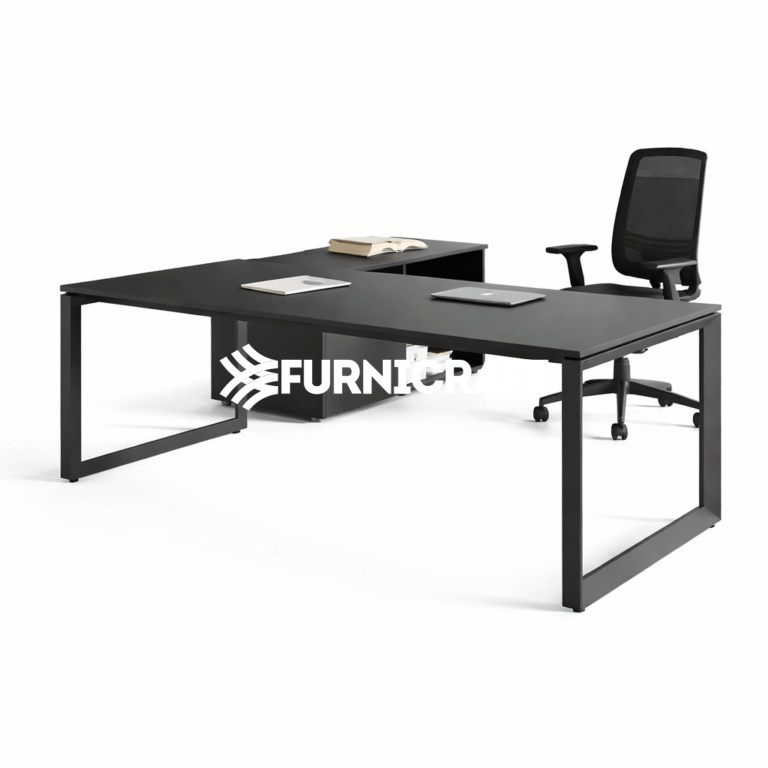
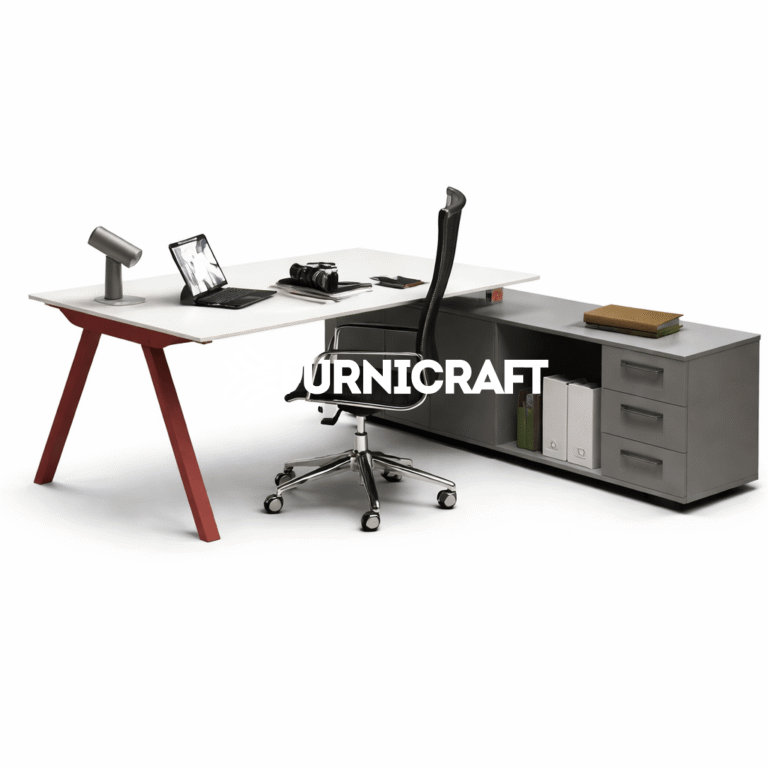
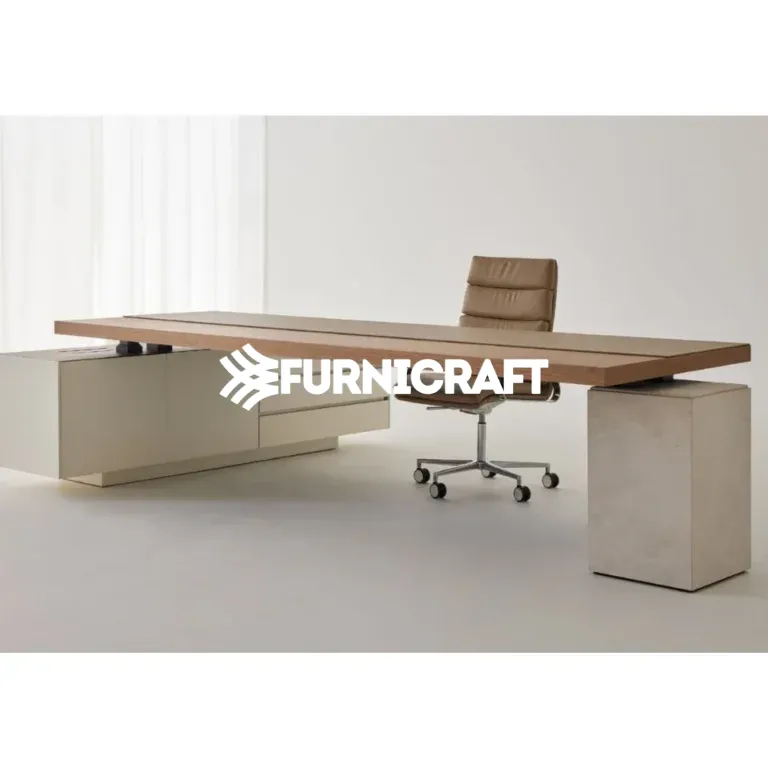
Complete the workspace with desks and storage that keep everything within easy reach, which supports how to properly sit at a computer all day.

Related Furnicraft Resources
- How to choose a sit-stand desk
- Small office setup ideas
- Desk shape guide for better productivity
- Best office desk material guide
- How to optimize your office space
- Workstation power socket types
- Table power socket with USB
- Executive desk vs workstation
Key Takeaways: How to Properly Sit at a Computer
- Set up the chair first, then the keyboard, then the screen.
- Keep feet supported, wrists straight and the screen at arm’s length.
- Your furniture must be adjustable enough to allow a good position.
- Laptop users need a separate keyboard, mouse and stand.
- Move regularly, because no position is ideal for hours.
- Review how to properly sit at a computer whenever you change your chair, desk or screen.
- See a health professional for persistent pain or numbness.
Need Furniture That Supports Better Posture?
If your current chair or desk makes a good position hard to hold, the Furnicraft team can suggest ergonomic options for your office. Get in touch through the contact page and tell us how many people will use the workstations. We can also advise on how to properly sit at a computer with the furniture you already have.
FAQs: How to Properly Sit at a Computer
What is the correct sitting position at a computer?
Feet supported, thighs roughly level, lower back against the backrest, shoulders relaxed, forearms about parallel to the floor and the screen at arm’s length with its top at or slightly below eye level.
How far should I sit from the monitor?
About an arm’s length is a common guide. Move the screen slightly closer or further until you can read it without leaning forward.
Should my feet touch the floor?
Yes, this is part of how to properly sit at a computer: feet flat on the floor, or supported on a footrest. Dangling feet can make the thighs press against the seat edge and reduce comfort.
How high should my monitor be?
The top of the screen should be at or slightly below eye level. People who wear bifocals may need it a little lower.
Is it bad to sit for long hours?
Staying in the same position for hours is uncomfortable for most people. Get up regularly, change position and walk when you can.
Do I need a special chair to sit properly?
You need one that adjusts enough to fit you, including seat height and back support. Specific features matter more than a label.
How do I sit properly when using a laptop?
Use a laptop stand to raise the screen and a separate keyboard and mouse. This allows both the screen and your hands to be in a comfortable position.
How can I sit properly at a computer with lower back pain?
Support the lower back with an adjustable backrest or lumbar cushion, keep your feet supported and change position often. Because pain has many causes, see a qualified health professional if it persists, rather than relying on furniture changes alone.
How often should I take a break from sitting?
Short, frequent breaks work better than one long one. Stand up, stretch and walk briefly through the day, and use a sit-stand desk if your workplace offers one.
When should I see a doctor about posture-related pain?
If you have ongoing pain, numbness, tingling or weakness, speak to a qualified health professional rather than relying on setup changes alone.
Need Help Furnishing Your Dubai Office?
Talk to Furnicraft about desks, chairs, meeting tables, reception furniture and storage for your workspace.
Follow Furnicraft for More Workspace Ideas
Real-life setups, workspace tips and the latest product drops.
Pyramid Centre, M11, Oud Metha, Dubai, UAE