
Table of Contents
An office table is the main work surface in any office, so choosing the right one affects comfort, storage, cable management and how professional the space looks. This guide explains how to choose an office table in Dubai, from staff desks and executive tables to training, meeting and height adjustable tables, with sizes, materials and layout tips plus links to the Furnicraft desk and table ranges.
Office Table: What to Check First
Start with the job the table has to do. A table for focused screen work needs different features from one used for meetings, training or a reception counter. Check these points before comparing models:
- Use: daily desk work, management, meetings, training or shared touch-down work.
- Size: width and depth for screens, documents and legroom.
- Height: fixed at 72 to 75 cm, or adjustable for sit-stand working.
- Frame: steel legs, panel ends or a central base, depending on stability and legroom.
- Top material: laminate, veneer, glass or solid surface for the level of use.
- Power and cables: grommets, trays and sockets built into the table.
Once these are clear, you can choose between a simple staff desk, an executive desk or a dedicated meeting table.
Office Table vs Office Desk: Is There a Difference?
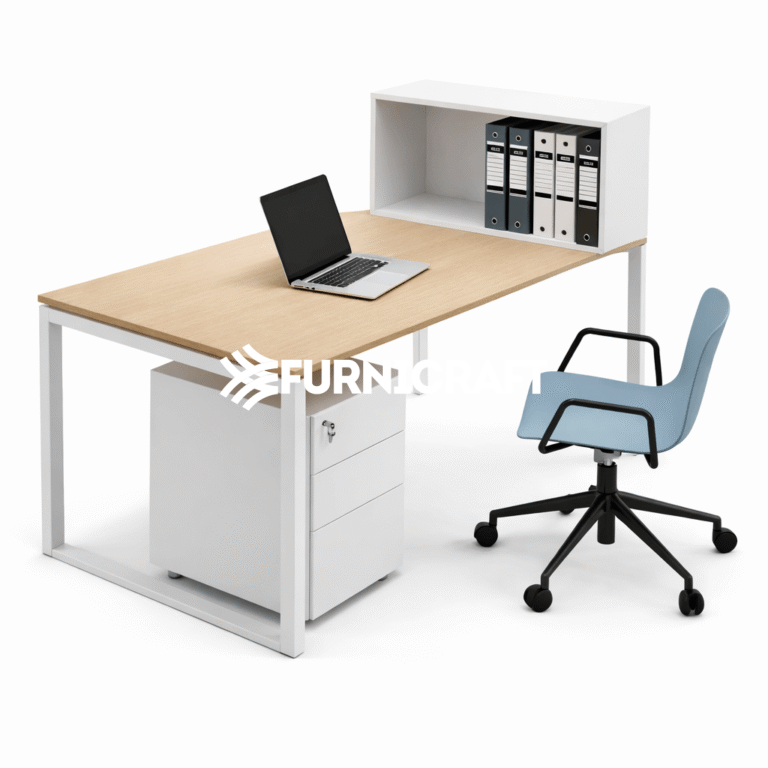
In Dubai the two terms are often used for the same thing: a work surface where one person sits with a computer. Strictly, a desk usually includes storage, a modesty panel or a return, while a table is an open top on legs. Many modern offices use simple tables with a separate mobile pedestal, which keeps the look light and makes layouts easier to change. For a detailed desk-only guide, see our office desk buying guide.
Types of Office Tables
Staff and workstation tables
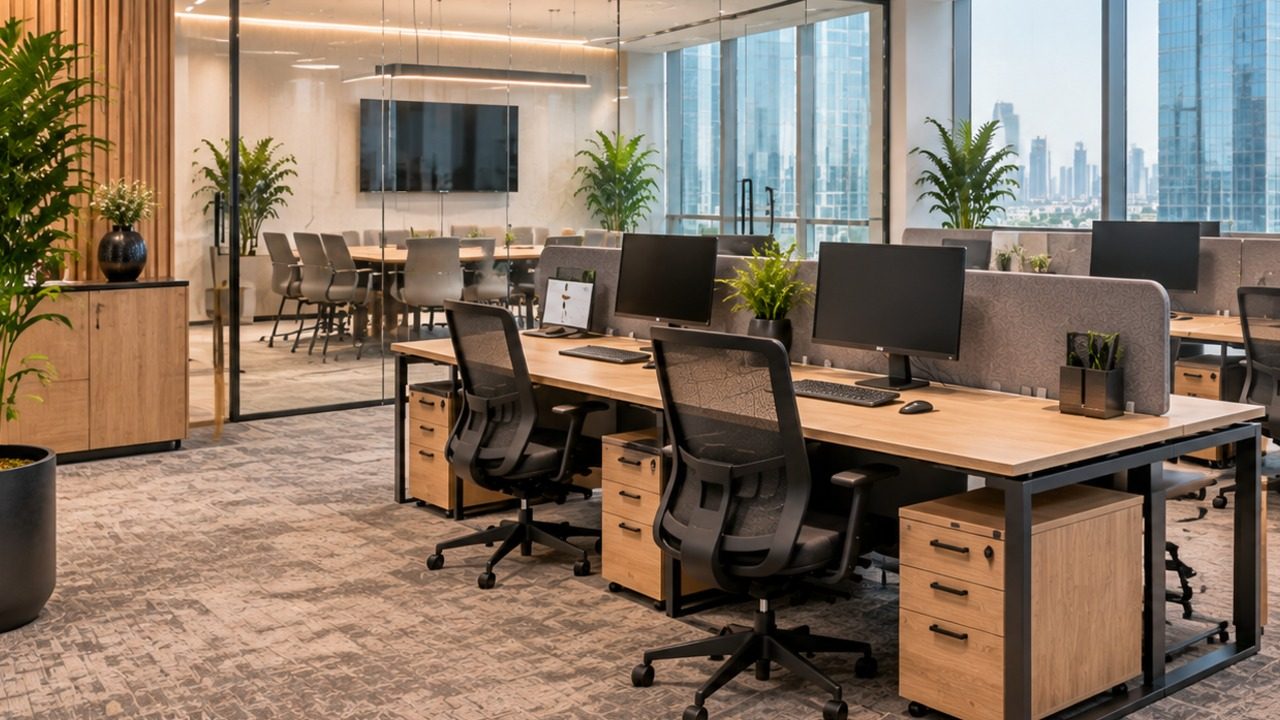
Single desks and linked workstations are the backbone of most offices. They are usually 120 to 160 cm wide, with screens between seats and cable trays underneath. Our article on modern workstations in Dubai explains current layouts.
Executive and manager tables
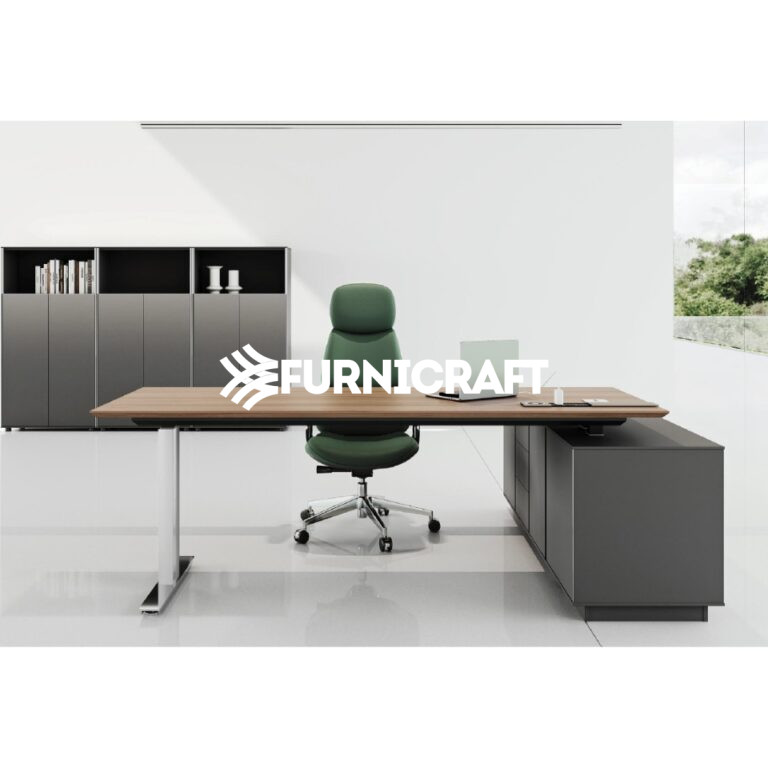
Executive tables are larger, often 180 to 220 cm, and frequently come with a side return and credenza. Manager tables sit between staff and executive sizes. Browse manager desks and see desks for leaders for ideas.
Height adjustable tables
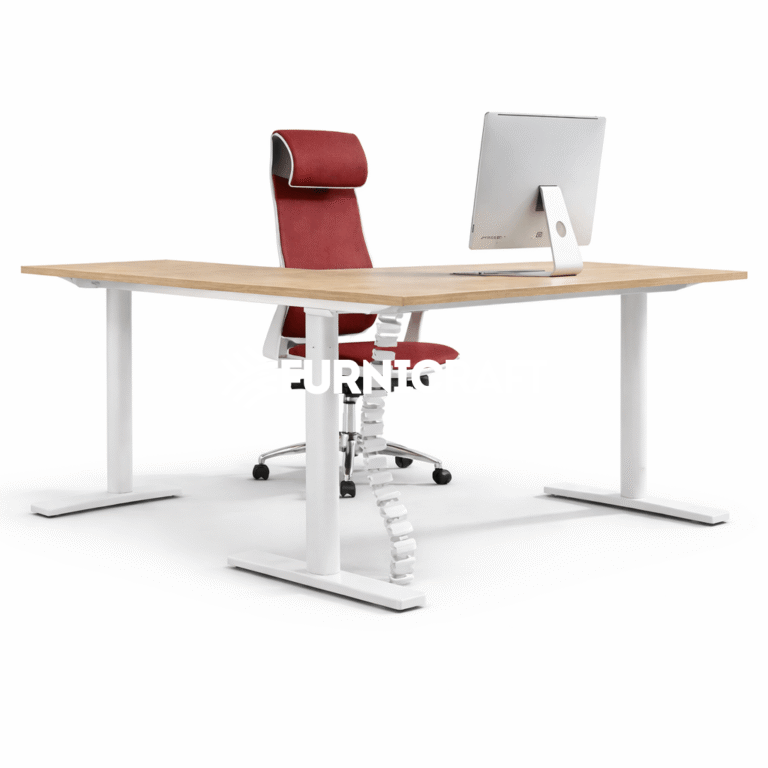
Sit-stand tables use electric motors to move between seated and standing heights, helping people change posture through the day. See the height adjustable desk range and our guide on how to choose a sit-stand desk.
Meeting and conference tables
Meeting tables seat teams for discussions and presentations. Shape matters: round tables suit small groups, while rectangular and boat-shaped tables suit larger rooms. Read our round table guide and top meeting tables in Dubai.
Training and folding tables
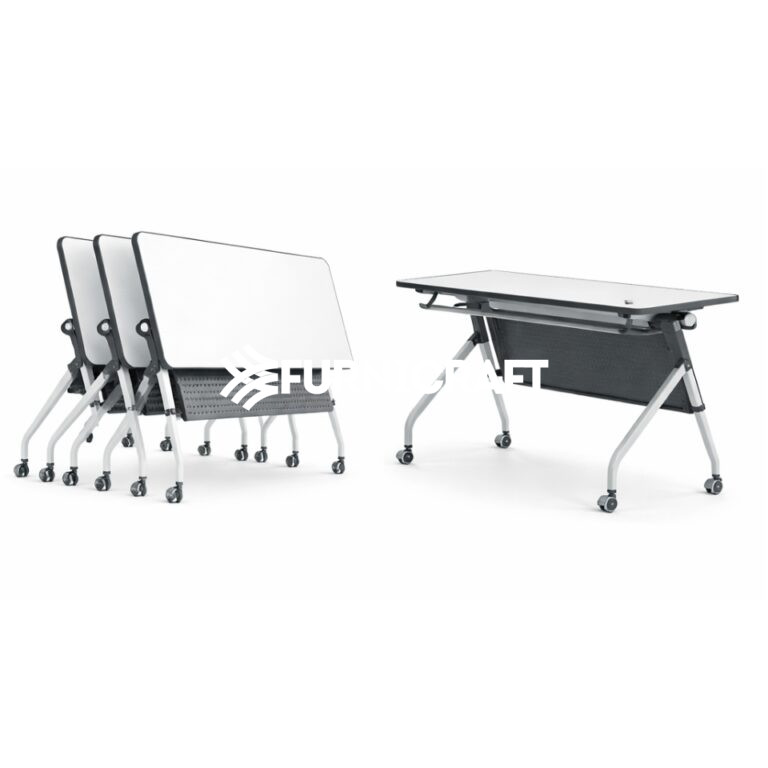
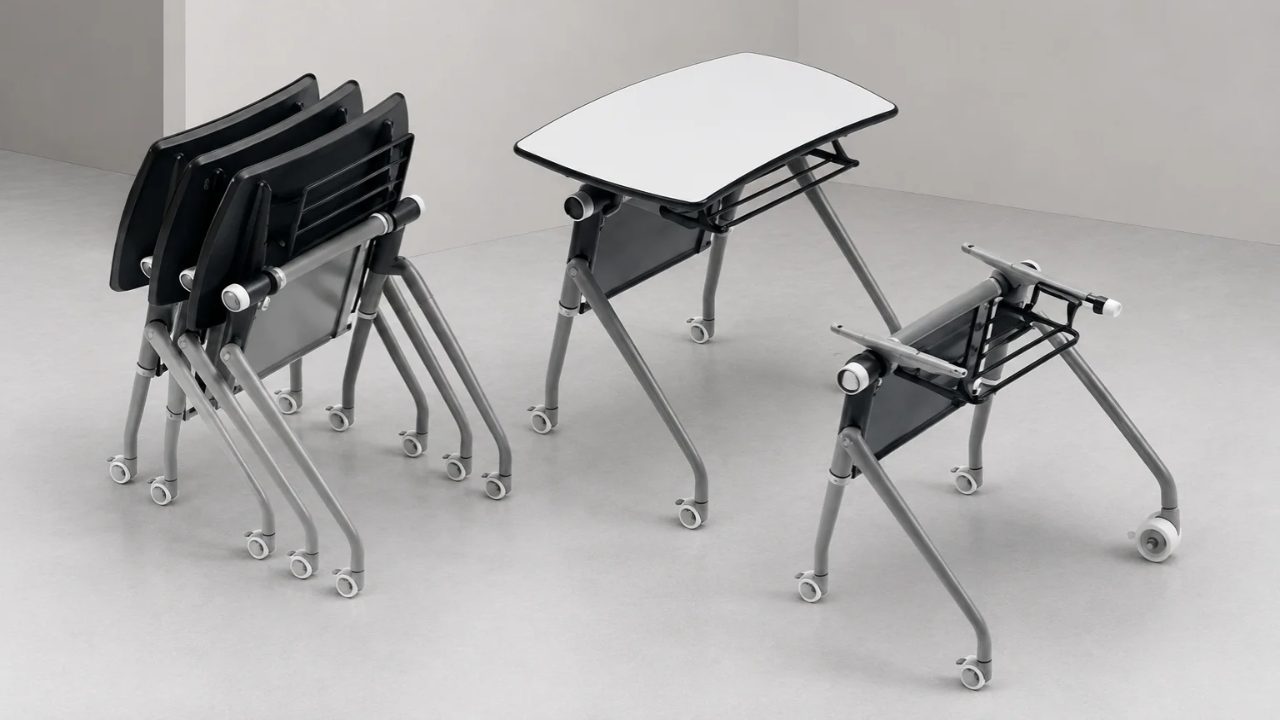
Training tables often have flip tops and castors, so they can be nested against a wall when the room is needed for something else. They suit training rooms, multi-purpose spaces and growing teams.
Pantry, coffee and side tables
Smaller tables complete the office: pantry tables for breaks, coffee tables for lounges and reception, and side tables beside sofas or armchairs.
Office Table Sizes
| Table type | Typical size | Notes |
|---|---|---|
| Compact staff table | 120 x 60 cm | Laptop and single screen; small offices |
| Standard staff table | 140 to 160 x 70 to 80 cm | Two screens and documents |
| Manager table | 160 to 180 x 80 cm | Room for a guest chair opposite |
| Executive table | 180 to 220 x 90 cm | Often with return and credenza |
| Meeting table for 6 | 180 to 240 x 100 to 120 cm | About 60 cm edge per person |
| Training table | 120 to 160 x 60 cm | Two people side by side |
Standard working height is 72 to 75 cm. Leave at least 90 to 100 cm behind each chair so people can stand up and walk past. Our guide on choosing desk size covers more detail.
Materials and Finishes
The top takes the most wear, so choose it for how the table will be used. High-pressure laminate and melamine resist scratches, heat and stains and are the most practical choice for staff tables. Wood veneer looks warmer and more premium for executive and meeting rooms but needs coasters and gentle cleaning. Glass tops look light and modern, though they show fingerprints. Frames are usually powder-coated steel, which is strong and easy to keep clean. Our office desk material guide compares the options in detail.
Office Tables from Furnicraft
Compare staff, executive, height adjustable and training tables.
Choosing a Shape
Rectangular tables are the most space-efficient and easiest to link into rows. L-shaped tables add a return for a second screen or printer and suit managers and receptionists. Round and oval tables suit meetings and collaboration, while curved or wave tops help create friendly clusters in open-plan areas. Our desk shape guide and the article on the best table shape for meetings explain when each works best.
Cable Management and Power
A tidy table needs a plan for cables. Look for desk grommets, under-desk cable trays and vertical cable spines that take wires down the leg to the floor box. For meetings and shared tables, a flush-mounted power and data box keeps chargers within reach. See our guides to workstation power sockets and connectivity boxes, and browse office accessories such as CPU holders and grommets.
Planning the Layout
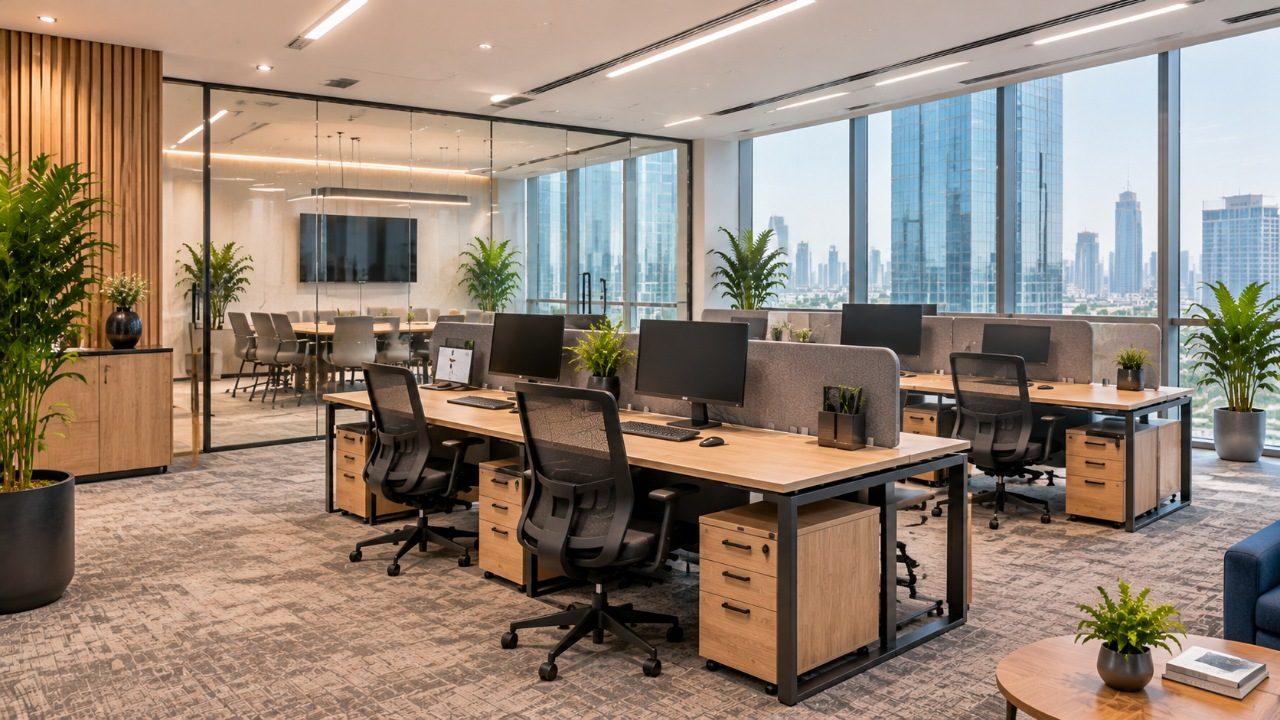
Plan tables around movement and light. Face screens side-on to windows to reduce glare, keep main walkways at least 120 cm wide and leave space for storage drawers to open. In open-plan areas, short desk screens help with privacy without blocking light. Our articles on desk placement, office movement and layout and optimising office space go into more detail.
Small offices
Choose compact tables with slim frames, and use mobile pedestals instead of fixed drawers. Our small office setup ideas and range of compact office furniture show how to save space.
Growing teams
Linked workstation tables with shared legs are easy to extend. See scalable office furniture and modular office furniture.
Ergonomics at the Office Table
A good table supports good posture. The top should sit around elbow height when seated, with the screen at eye level and an arm’s length away. Pair tables with adjustable chairs such as mesh chairs or swivel chairs, and read our guide to office ergonomics in Dubai.
Budget, Mid-Range or Premium?
Budget tables use thinner tops and simpler frames; they suit short-term projects and low-use areas. Mid-range tables with 25 mm laminate tops, steel frames and cable trays suit most staff. Premium tables add veneer, heavier frames, integrated power and designer details for executive floors and client areas. Our article on creating a modern office on a budget shows how to balance cost and quality.
Office Tables for Different Types of Business
Different businesses use tables in different ways. Finance, legal and government-facing offices usually need larger tables with lockable storage and a formal look, because staff handle paper files and meet clients at their desks. Technology and creative companies tend to prefer open benching tables with power at every seat and a few height adjustable tables, so teams can regroup quickly. Call centres and operations teams need compact, durable tables in long rows, with screens for acoustic privacy and easy access to cables for IT support.
Clinics, schools and training providers often combine standard desks with folding training tables, so one room can switch between classes, workshops and meetings. Retail head offices and showrooms usually want a few premium tables for visitors alongside practical staff tables behind the scenes. Thinking about how your own team works makes it much easier to choose the right mix.
Office Tables for Hybrid Work
With more people working part of the week from home, many Dubai offices now plan fewer fixed desks and more shared tables. Touch-down tables near the entrance let visiting staff plug in for an hour or two. Bookable team tables give project groups a shared base on the days they meet. Height adjustable tables are especially useful here because different people use the same table during the week. Add lockers or mobile pedestals so staff can store their belongings, and make sure every shared table has easy access to power and a clear cable route.
Questions to Ask Your Supplier
- What is the top thickness and material, and how does it handle heat and scratches?
- Is the frame steel, and what weight is it rated for?
- Are cable trays, grommets and power modules included or optional?
- Can tables be linked or extended later?
- What is the warranty, and how long does delivery and installation take in Dubai?
A Simple Buying Checklist
- List each area and what the table will be used for.
- Measure the room and mark table sizes plus walkways on the plan.
- Choose fixed or height adjustable tables for each team.
- Pick a top material that suits the level of use.
- Plan cables, power and storage with the table.
- Match finishes with chairs, storage cabinets and meeting tables.
- Confirm delivery, installation and warranty in writing.
Common Office Table Mistakes
- Buying tables too deep or too wide for the room.
- Forgetting cable management and power.
- Choosing glossy finishes that show every mark.
- Mixing different table heights in one area.
- Leaving no space behind chairs for movement.
See our wider guide to office furniture buying mistakes and common workstation mistakes.
Care and Maintenance
- Wipe laminate with a damp cloth and mild cleaner; avoid abrasive pads.
- Use coasters and mats on veneer.
- Check leg bolts and levelling glides every few months.
- Keep tables out of strong direct sun to protect finishes.
Key Takeaways: Choosing an Office Table
- Match the table type to the job: staff, executive, meeting, training or sit-stand.
- 140 to 160 cm wide and 72 to 75 cm high suits most staff.
- Laminate tops and steel frames give the best value for daily use.
- Plan cables, power and storage at the same time as the table.
- Keep finishes and heights consistent across each area.
Get Help Choosing Office Tables
Furnicraft helps businesses across Dubai plan and furnish offices of every size. Send us your floor plan or visit our showroom to compare tops, frames and sizes, or contact our team for a quote. You can also browse the executive desk, staff desk and meeting table ranges.
FAQs: Office Tables
What is the standard size of an office table?
A standard office table for one person is about 140 to 160 cm wide and 70 to 80 cm deep, at a height of 72 to 75 cm.
What is the difference between an office table and an office desk?
The terms are often used for the same thing. A desk usually includes storage or a modesty panel, while a table is an open top on legs that is often paired with a mobile pedestal.
Which material is best for an office table in Dubai?
High-pressure laminate is the most practical choice for daily use because it resists scratches, heat and stains. Veneer suits executive offices, and glass suits meeting rooms that are cleaned often.
Should I choose a height adjustable office table?
A height adjustable table is worth it for people who spend most of the day at a screen, because it lets them switch between sitting and standing.
How much space does an office table need?
Allow the table size plus at least 90 to 100 cm behind the chair for movement, and keep walkways clear between rows.
Does Furnicraft supply office tables in Dubai?
Yes. Furnicraft supplies staff, executive, height adjustable, meeting and training tables across Dubai and the UAE.
Need Help Furnishing Your Dubai Office?
Talk to Furnicraft about desks, chairs, meeting tables, reception furniture and storage for your workspace.
Follow Furnicraft for More Workspace Ideas
Real-life setups, workspace tips and the latest product drops.
Pyramid Centre, M11, Oud Metha, Dubai, UAE