
Table of Contents
A round table changes how people meet. With no head of the table and every seat facing the centre, conversations feel more equal and small groups work together more easily. This guide explains when to choose a round table for an office in Dubai, covering sizes, seating capacity, materials, room planning and the alternatives, with links to the Furnicraft meeting table range and the chairs that go with it.
Round Table: What to Check First
Begin with the purpose of the room and the number of people. A round table works best for small, collaborative meetings and informal discussions, and less well for large formal presentations. Check these points before you compare designs:
- Purpose: team huddles, client conversations, interviews, pantry or breakout use.
- Group size: round tables are most effective for 2 to 8 people.
- Diameter: matched to the number of seats and the room size.
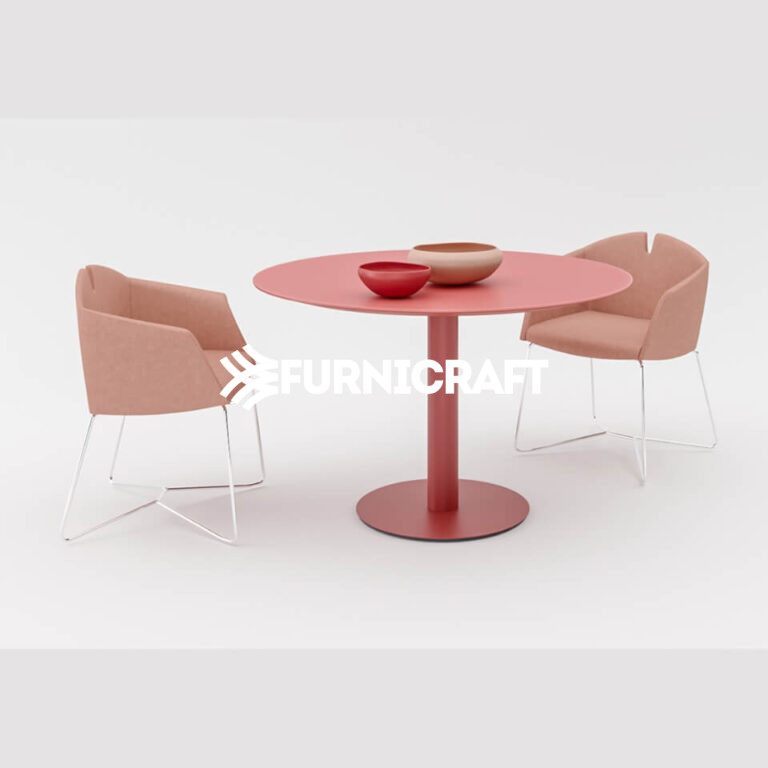
- Base: a central pedestal base gives more legroom than four legs.
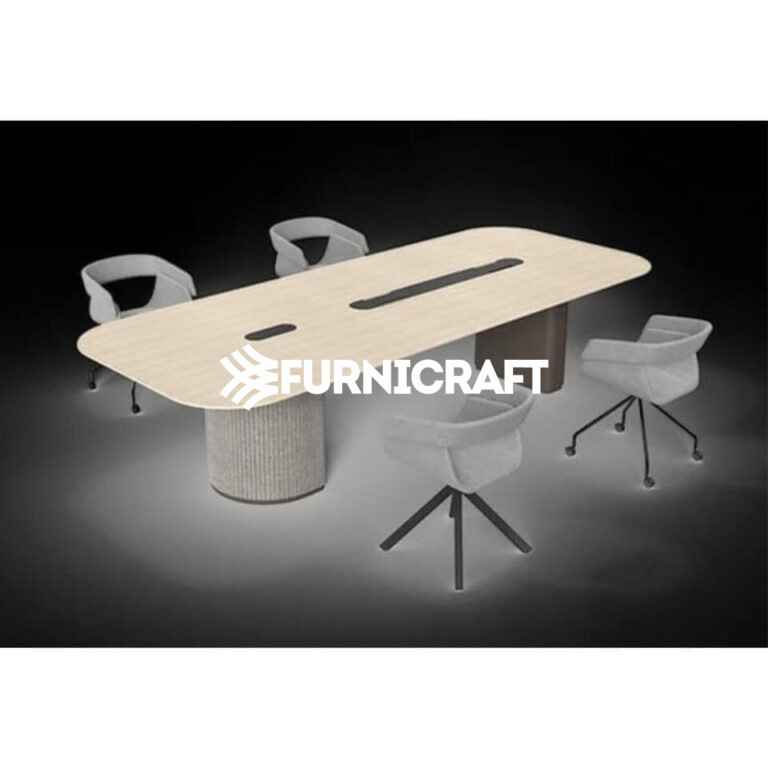
- Technology: whether you need a power or data box in the top.
With these settled, you can match the table to suitable office chairs and plan the room around it.
Why Choose a Round Table for Meetings?
Round tables remove hierarchy. Nobody sits at the head, everyone can see everyone else and eye contact comes naturally. That encourages participation from quieter team members and makes discussions feel more open, which is why many offices use them for brainstorming, one-to-ones and client conversations.
They also save space in smaller rooms. Without corners, a round table is easier to walk around and fits neatly in corners, glass meeting pods and open areas. Our article on the best table shape for meetings compares round, rectangular and boat-shaped designs in more detail.
When a Round Table Is the Right Choice
Small meeting rooms
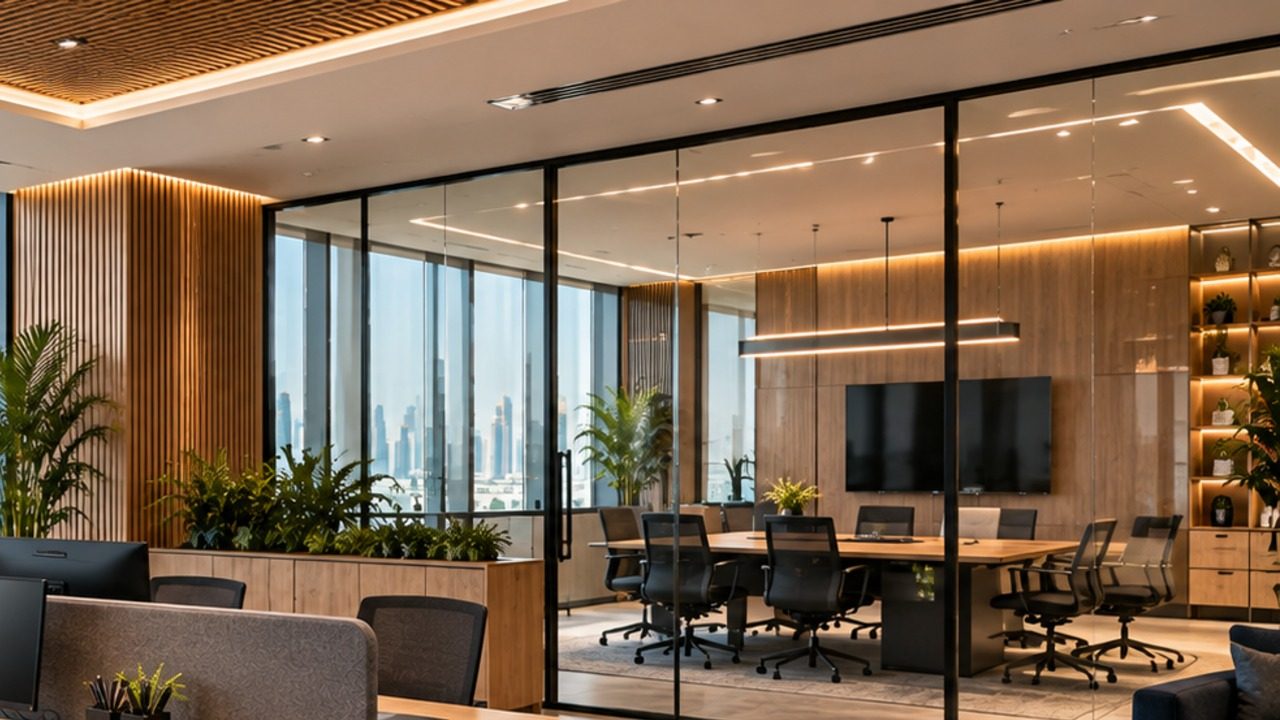
For four to six people, a round table makes a small room feel larger and keeps everyone within easy reach of shared documents or a laptop. It suits quick reviews, interviews and catch-ups that do not need a screen at one end.
Executive offices
A small round table beside an executive desk gives directors a separate place to meet without sitting across the desk, which makes conversations feel more equal and relaxed.
Collaborative and breakout areas
In collaborative areas, round tables invite people to gather, sketch ideas and move chairs in and out. Our article on how modern collaboration starts with the right table explains why shape matters for teamwork.
Pantry and café spaces
Round café tables suit pantry areas, where people sit in twos and threes for lunch or coffee. Their compact footprint lets you fit more tables in a small kitchen area.
Reception and client lounges
A small round table near reception gives visitors a place to fill in forms or meet staff briefly before moving to a meeting room.
Round Table Sizes and Seating Capacity
| Diameter | Seats | Best use |
|---|---|---|
| 60 to 80 cm | 2 | Café, pantry and one-to-one chats |
| 90 to 100 cm | 3 to 4 | Executive corners and interviews |
| 110 to 120 cm | 4 to 5 | Small meeting rooms and team huddles |
| 140 to 150 cm | 6 | Project meetings and client conversations |
| 160 to 180 cm | 7 to 8 | Larger round meetings; beyond this, people sit too far apart |
Allow about 60 cm of table edge per person and at least 90 to 100 cm between the table edge and walls or other furniture, so chairs can slide back and people can walk behind them. Standard table height is 72 to 75 cm.
When a Round Table Is Not the Best Choice
Round tables become less practical as groups grow. Above eight people, the centre of the table becomes unreachable and seats end up too far apart for comfortable conversation. They are also weaker for presentation-led meetings, where everyone needs to face a screen at one end of the room; in those cases a rectangular, boat-shaped or U-shaped table works better. See top conference table designs in Dubai and our conference layout ideas for larger rooms.
Round Table Bases and Legroom
The base decides comfort as much as the top. A single central pedestal or disc base leaves all the legroom free, so people can sit anywhere around the table without knocking a leg. Four-leg designs are sturdy and easy to make in larger sizes, but they limit seat positions. For larger round tables, a cross or star base spreads the load while still leaving space for knees.
Check stability before you buy. A round top on a single base should not rock when someone leans on the edge, and adjustable glides help level the table on uneven floors.
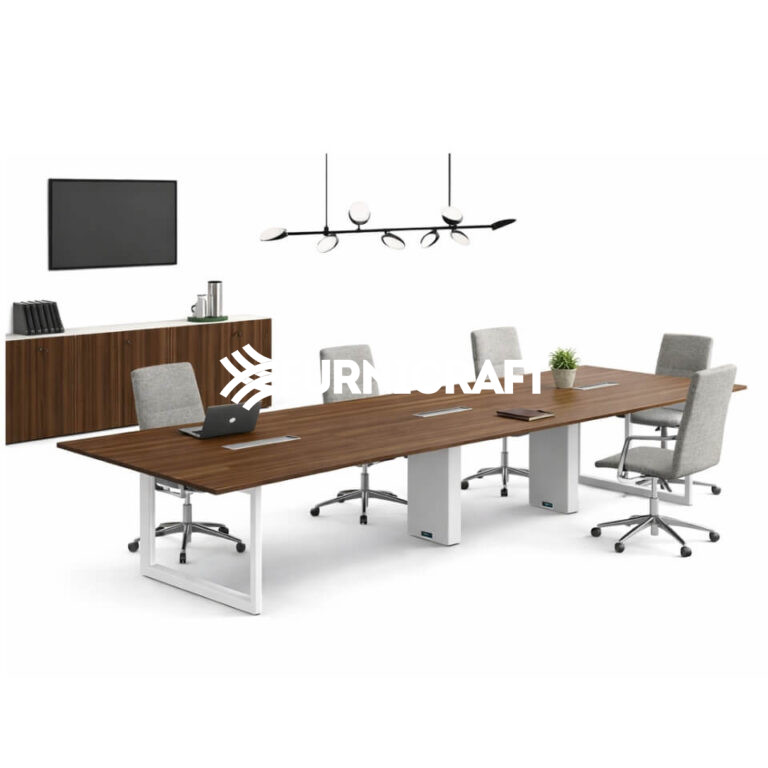
Round and Meeting Tables from Furnicraft
Compare round, café and meeting tables for different room sizes.

Materials and Finishes
Wood veneer and high-pressure laminate are the most common tops for office round tables. Laminate resists scratches, heat and stains and is easy to clean, which suits busy meeting rooms and pantries. Veneer looks warmer and more premium for executive offices. Glass tops feel light and modern but show fingerprints and need frequent cleaning. Stone and sintered tops are durable and striking but heavy, so check the base and floor loading. Our article on meeting table quality explains what to look for in construction.
Technology on Round Tables
Even small meetings need power for laptops and phones. A flush-mounted connectivity box in the centre of the table gives everyone equal access to power, USB and data without trailing cables. Plan the cable route down the base to a floor box so nothing crosses the walkway. Our article on popular connectivity box options covers the choices.
Choosing Chairs for a Round Table
Chairs should be narrow enough to fit around the curve without arms clashing. For meeting rooms, choose light swivel chairs with low or no arms that slide under the table edge. For pantries and cafés, stackable chairs or stools suit quick turnover. Our swivel chairs guide and the mesh chair range help you match seating to the table.
Planning a Room Around a Round Table
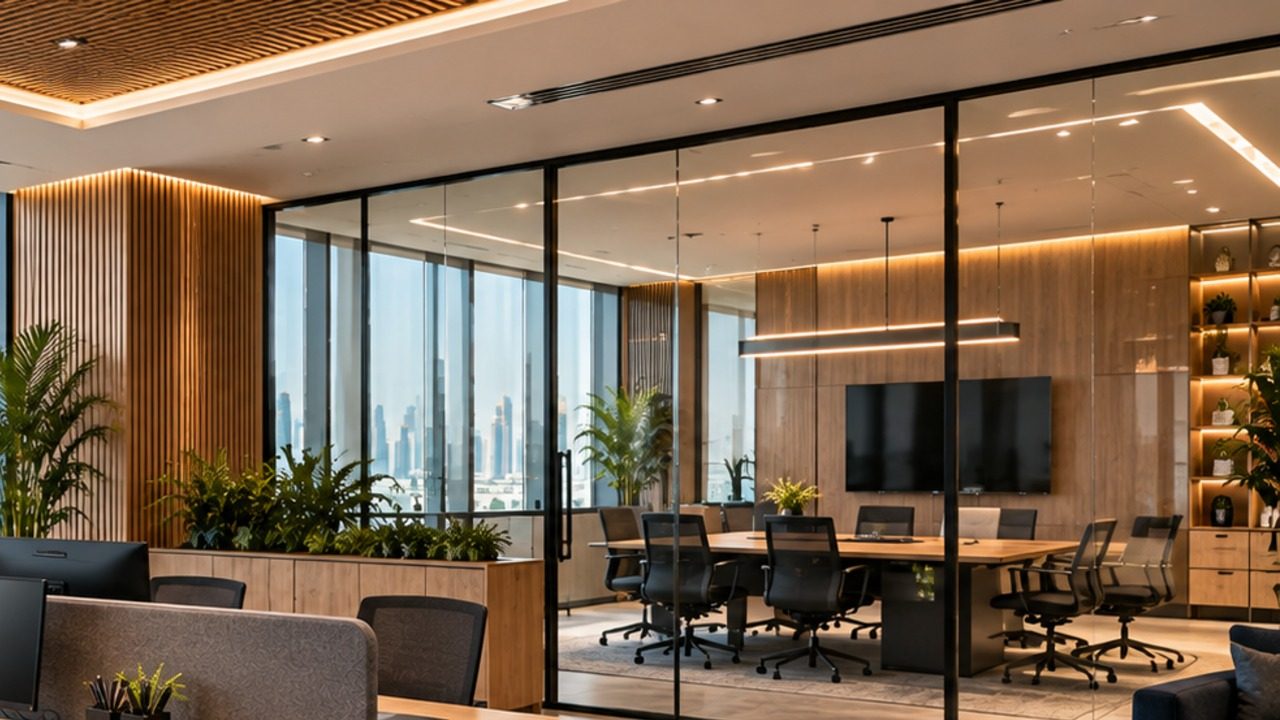
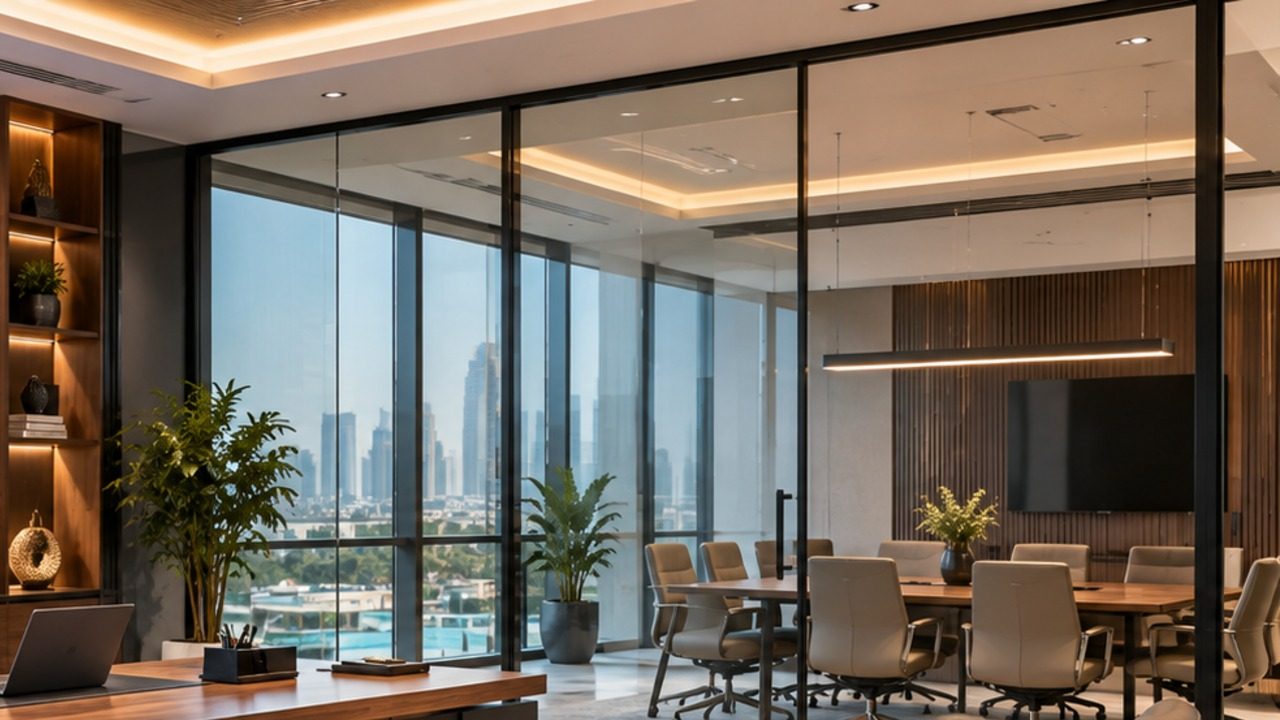
Place the table so everyone has a clear path in and out, and keep it away from door swings. In glass meeting rooms, centre the table so the room feels balanced from outside. If you need a screen, mount it on the wall where the fewest people have to turn their chairs, and keep the table small enough that everyone can still see it. Our article on where top Dubai offices gather around the table shows real examples.
Round Table vs Square and Oval Tables
A square table offers similar equality for four people but takes more floor space for the same seating. Oval and racetrack tables combine some of the openness of a round table with the length needed for larger groups and a screen at one end, which makes them a good middle ground for 8 to 12 people. Rectangular tables remain the most efficient for large boardrooms. See our guide to top meeting tables to buy in Dubai for more options.
Round Tables for Hybrid Meetings
Hybrid meetings, where some people join by video, need a little extra planning around a round table. A camera mounted on the wall sees only part of the circle, so a central 360-degree conference camera and speaker often works better, sitting in the middle of the table and capturing every participant equally. Keep the table to six seats or fewer for video calls so everyone stays in frame and within range of the microphone.
If the room is used mainly for video calls with a large screen, consider a D-shaped or oval table instead, with the flat side towards the screen. Our article on how the right meeting table improves team collaboration explains how table choice supports different meeting styles.
Round Tables in Small Dubai Offices
Space is expensive in Dubai, and many companies work from compact units in business towers and free zones. A round table is often the most efficient way to add a meeting point without building a separate room. A 100 to 120 cm table in a corner can serve as a meeting spot, a lunch table and an overflow workspace. Pair it with stackable or light chairs that can be moved when the space is needed for something else. Our guide to small office setup ideas has more ways to make a compact office work harder.
Style and Brand Impression
A round table can soften a room full of straight lines and sharp corners. Warm veneer suits client-facing offices, white or light oak tops look clean and modern, and a dark stone top makes a strong statement in executive suites. Keep the finish consistent with the rest of the floor so the room feels part of one design. Our article on office aesthetics and the selection of functional and stylish conference picks show how furniture shape and finish shape first impressions.
A Simple Planning Checklist
- Define the main use of the room and the usual group size.
- Measure the room and subtract 90 to 100 cm clearance around the table.
- Choose a diameter from the seating table above.
- Pick a base that leaves legroom and stays stable.
- Decide on power and data needs before ordering the top.
- Select chairs that fit around the curve.
- Match finishes with desks, storage and other meeting rooms.
Common Round Table Mistakes to Avoid
- Choosing a table too large for the room, leaving no space to pull chairs back.
- Using round tables for large presentation-led meetings.
- Picking four-leg bases that block seat positions.
- Forgetting power, so cables trail across the floor.
- Choosing chairs with wide arms that clash around the curve.
For wider buying advice, see our guides on what to consider when choosing a conference table and office furniture buying mistakes.
Care and Maintenance
- Wipe laminate and veneer tops with a soft damp cloth and mild cleaner.
- Use coasters on veneer and stone to avoid rings and stains.
- Clean glass tops daily in busy rooms.
- Check base fixings and glides every few months.
Key Takeaways: Choosing a Round Table
- Round tables suit small, collaborative meetings of 2 to 8 people.
- Allow about 60 cm of edge per person and 90 to 100 cm clearance around the table.
- A central base gives the most legroom.
- Plan power and chairs together with the table.
- For larger or screen-led meetings, choose oval or rectangular tables instead.
Get Help Choosing a Round Table
Furnicraft helps businesses across Dubai plan meeting rooms, executive corners and pantry areas. Send us your room size or visit our showroom to compare tops and bases, or contact our team for a quote. You can also browse the full meeting table range and pantry tables and chairs.
FAQs: Round Tables for Offices
When should I choose a round table for meetings?
Choose a round table for small, collaborative meetings of 2 to 8 people where open discussion matters more than a presentation screen.
How many people can sit at a round table?
A 90 to 100 cm round table seats 3 to 4 people, a 120 cm table seats 4 to 5 and a 150 cm table seats about 6. Larger round tables seat up to 8.
Is a round or rectangular table better for an office?
Round tables suit small groups and equal discussion. Rectangular tables suit larger meetings, presentations and rooms where everyone faces a screen.
How much space does a round meeting table need?
Leave at least 90 to 100 cm between the table edge and walls or other furniture so chairs can move back and people can walk around.
Can a round table have power and data sockets?
Yes. Many round meeting tables can take a central or flush-mounted connectivity box for power, USB and data.
Does Furnicraft supply round tables in Dubai?
Yes. Furnicraft supplies round meeting, café and pantry tables across Dubai and the UAE, with matching chairs.
Need Help Furnishing Your Dubai Office?
Talk to Furnicraft about desks, chairs, meeting tables, reception furniture and storage for your workspace.
Follow Furnicraft for More Workspace Ideas
Real-life setups, workspace tips and the latest product drops.
Pyramid Centre, M11, Oud Metha, Dubai, UAE