
Table of Contents
Paperwork, supplies and personal items pile up fast in any office, and the desks pay the price. Storage cabinets give every item a place, keep surfaces clear and make a workspace look organised to staff and visitors. This guide explains how to choose storage cabinets for an office in Dubai, covering cabinet types, sizes, materials, safety, layout and maintenance, with links to the Furnicraft ranges that suit each need.
Storage Cabinets: What to Check First
Decide what needs to be stored before you choose a design. The right storage cabinets match the items, the users and the space. Check these points first:
- Contents: files, stationery, equipment, samples or personal belongings.
- Access: how often items are used and by how many people.
- Security: whether doors or drawers need locks.
- Size: height, width and depth that fit the room and the load.
- Position: against a wall, beside desks or as a divider.
- Finish: a look that matches the desks and the rest of the office.
Why Storage Cabinets Matter in an Office
Clutter slows people down. When papers, cables and supplies live on desks, people spend time searching and the office looks untidy. Good storage cabinets reduce that friction by giving each category of item a fixed home. They also protect documents and equipment, and they can double as a visual divider between work zones.
Storage is also part of how a company presents itself. Clients who walk into a tidy reception or meeting area notice the order, and staff who can find what they need work with less stress. Planning storage together with desks and seating helps the whole fit-out look consistent, and our guide to reducing clutter with the right furniture shows how storage supports a clear workspace.
Types of Storage Cabinets for Dubai Offices
Drawer and filing cabinets
Drawer units hold files, folders and documents in a compact footprint. They suit teams that still keep paper records, and they work well along a wall or in a records area. Browse our storage cabinets range for drawer and filing options.
Cupboards and tall cabinets
Tall cabinets with doors hide stationery, binders and supplies behind a clean front. They suit open plan offices where visual order matters, because closed doors keep the contents out of sight.

Low cabinets and credenzas
Low units give storage without blocking views or light. They can sit behind a manager’s chair, along a window or beside a lounge, and the top surface can hold plants, accessories or printers. A credenza also pairs well with an executive desk or a manager desk.
Mobile pedestals
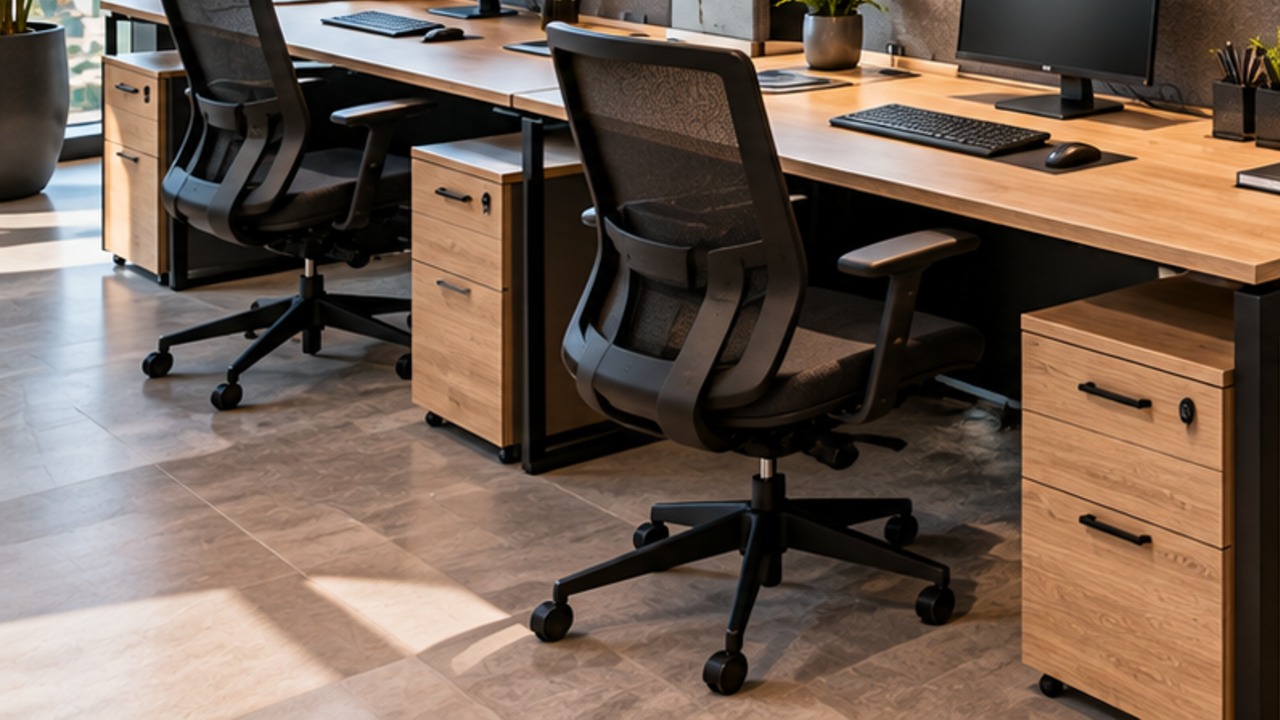
A mobile pedestal sits under a desk and keeps personal files and stationery at hand. It is a flexible option for workstations, and it can move if the layout changes. Pair pedestals with staff desks and office workstations for tidy individual storage.
Lockers and secure storage
Offices with shared desks or hybrid teams often need a place for personal items. Lockable cabinets let people leave belongings safely and keep desks clear for the next user. This works especially well alongside a flexible height adjustable desk layout.
Comparing Storage Cabinet Types
| Type | Best for | Main advantage | Consider |
|---|---|---|---|
| Drawer or filing cabinet | Document-heavy teams | Compact and organised | Weight and tipping safety |
| Tall cupboard | Open plan offices | Hides contents behind doors | Needs wall space |
| Low cabinet or credenza | Manager rooms, lounges | Storage plus a useful top surface | Less capacity than tall units |
| Mobile pedestal | Individual workstations | Moves with the desk | Small capacity |
| Locker | Shared or hybrid desks | Secure personal storage | Plan the number of users |
Storage Cabinets from Furnicraft
Compare cabinet designs for files, supplies and personal items.


How to Choose the Right Storage Cabinets
- Measure what you store. List the items and their dimensions so the cabinet interior fits them, from lever arch files to equipment.
- Choose by access. Frequently used items belong in easy-to-reach cabinets, and rarely used items can go higher or further away.
- Check the room. Allow space for doors and drawers to open fully without hitting a desk or a walkway.
- Plan the weight. Heavy items belong low, which keeps cabinets stable and reduces strain.
- Add security where needed. Choose locks for confidential files and personal belongings.
- Match the finish. Colour and material should suit the desks and the rest of the room.
Our office desk material guide also helps you compare surfaces, because the same finishes often apply to cabinets.
Storage Cabinet Materials and Finishes
Cabinets for offices are commonly made from laminated board, wood veneer or metal. Laminated board is durable and easy to clean, veneer adds a warm look and metal suits utility and records areas. Ask the supplier for finish and care details for the exact model, and check handles, hinges and runners, because these parts get the most use. Choose a finish that stands up to daily contact.
- Laminate or melamine: practical and easy to wipe.
- Wood veneer: warm and premium, suited to manager and executive rooms.
- Metal: strong and suited to heavy or secure storage.
Safety When Using Storage Cabinets
Cabinets carry weight, so safety matters. The Australian government’s Comcare office advises that employers consider buying filing cabinets that allow only one drawer to be open at a time, and warns against overloading them and opening several drawers at once. It is an Australian reference, not a UAE rule, but the guidance is sensible anywhere.
- Put heavy items in the lower drawers and lighter ones higher up.
- Open one drawer at a time and keep drawers closed when not in use.
- Do not overload cabinets or climb on them.
- Check whether tall cabinets should be fixed to the wall to prevent tipping.
Choosing Storage for Different Teams
Teams store different things, so one design rarely fits everyone. Finance and administration teams often keep documents and need drawers with locks. Design and creative teams may need deep shelves for samples and materials. Sales teams usually want quick access to brochures and supplies, while managers keep confidential files that need secure storage. Ask each team what they keep, how often they use it and how much room it takes, and note the answers before choosing a design.
A short audit of current storage often shows how much space is wasted. Items that are never used can go, duplicates can be merged and bulky items can move to a shared store. That makes it easier to choose the right number of cabinets and avoids paying for capacity the office does not need.
Digital Records and the Role of Paper Storage
Many offices now keep more records digitally, but paper has not disappeared. Contracts, invoices and signed forms are often still printed, and some must be kept for a set period. Decide which documents must be stored as paper, and give them a dedicated area with a lock and a clear labelling system. Everything else can be scanned and stored digitally, which frees cabinet space for supplies and equipment. This approach keeps the office tidy without making it hard to find important records.
Keeping Storage Organised Over Time
Good storage drifts into clutter unless someone looks after it. Set a regular review, perhaps every few months, to remove outdated files and rebalance contents. Keep labels current, make one person responsible for each unit and agree simple rules for borrowing and returning shared items. When a team moves or grows, review its storage at the same time so the layout still works.
Planning Storage Cabinets in the Office Layout
Place storage where people actually use it. Cabinets near the team that needs them save walking, while shared storage works best in a central, easy-to-reach spot. Keep walkways clear and leave space for doors and drawers to open. Our guides to office movement layout and desk placement and productivity help you balance storage and circulation, and how to optimize your office space covers the wider plan.
Small offices
In a small room, use slim or low cabinets and mobile pedestals so floor space stays free. Read small office setup ideas and compact office furniture in Dubai for space-saving ideas.
Growing teams
Choose storage that can repeat or be reconfigured. See modular office furniture and scalable furniture for growing teams for flexible choices.
Reception, meeting and lounge areas
A low cabinet in reception or beside a lounge keeps brochures and supplies out of sight. Pair it with a reception desk, meeting tables and a coffee table for a consistent look, and use a silent box where you need a quiet corner.
Storage Cabinets and Ergonomics
Storage affects posture. Items used daily should sit between waist and shoulder height, so people do not bend or stretch. Keep heavy files low and avoid placing cabinets where they force a user to twist. Pair good storage with a supportive chair, such as our office chairs, and read office ergonomics in Dubai and why your back hurts at work to understand how storage and seating work together. Our office desk buying guide explains how desk and storage planning fit together.
Organising What Goes Inside
Even the best cabinets need a system. Label shelves and drawers, group items by team or purpose and keep a simple rule for returning things. Review contents regularly and remove anything that is no longer needed. Use office accessories such as trays and organisers to keep small items in order, and keep cables tidy with a cable grommet near any storage that holds equipment.
Caring for Storage Cabinets
Wipe surfaces with a soft cloth and a cleaner that suits the finish. Check hinges, handles and drawer runners from time to time and tighten loose fittings. Do not overload shelves, and keep liquids away from stored documents. In shared offices, agree who is responsible for each cabinet so contents stay organised.
Planning a Storage Budget
Buy storage by need, not by habit. Spend on durable cabinets for heavy use and choose lighter units for occasional storage. Repeating one style across the office saves time and keeps the look consistent. Our guides to creating a modern office space on a budget and office furniture buying mistakes help you avoid common overspending.
Questions to Ask Your Supplier
- What are the exact dimensions, weight capacity and interior layout?
- Which locks and safety features are available?
- Which finishes are used, and how should they be cleaned?
- Is delivery and installation included in Dubai?
- Can the same model be reordered later?
Common Storage Cabinet Mistakes to Avoid
- Buying cabinets before listing what needs to be stored.
- Leaving no space for doors and drawers to open.
- Putting heavy items in high shelves.
- Overloading drawers or ignoring tipping risk.
- Choosing a finish that clashes with the desks.
- Forgetting lockable storage for personal items.
Complete the Workspace
Pair your storage with desks, chairs and workstations.


Key Takeaways: Choosing Storage Cabinets
- List what you store first, then choose cabinet type and size.
- Match the cabinet to access, security and the available space.
- Keep heavy items low and follow safe drawer practice.
- Plan storage together with desks, seating and walkways.
- Choose styles and finishes that can repeat as the team grows.
Get Help Choosing Storage Cabinets
Tell the Furnicraft team what you need to store and how your office is laid out, and we can suggest suitable cabinets and matching furniture. Contact us through the contact page or see our full range of cabinets.
FAQs: Storage Cabinets for Offices
What type of storage cabinet suits a small office?
Slim or low cabinets and mobile pedestals work well, because they keep floor space free while still holding files and supplies.
How do I choose between drawer and door cabinets?
Drawers suit files and documents, while door cabinets hide stationery and supplies. Choose by what you store and how often you use it.
Should office storage cabinets have locks?
Locks are useful for confidential files and personal belongings, especially with shared or hybrid desks.
Where should heavy items be stored?
Keep heavy items in lower drawers or shelves, which keeps the cabinet stable and reduces strain when lifting.
How much space do I need around a cabinet?
Leave room for doors and drawers to open fully and for people to walk past. Test the layout on a floor plan before ordering.
Can storage cabinets match my desks?
Yes. Ask the supplier for finishes that match your desks and other furniture so the office looks consistent.
Are storage cabinets safe if they are tall?
Tall units should be stable and not overloaded. Check whether they need wall fixing and follow the supplier’s guidance.
How can I keep storage cabinets organised?
Label shelves and drawers, group items by purpose and review contents regularly so only useful items stay in storage.
Need Help Furnishing Your Dubai Office?
Talk to Furnicraft about desks, chairs, meeting tables, reception furniture and storage for your workspace.
Follow Furnicraft for More Workspace Ideas
Real-life setups, workspace tips and the latest product drops.
Pyramid Centre, M11, Oud Metha, Dubai, UAE