
Office Furniture Selection is not only about choosing desks, chairs, tables, or cabinets that look professional. Color also plays a powerful role in how employees feel, how visitors experience the office, and how productive a workspace becomes. The right color choices can make an office feel calm, focused, creative, premium, energetic, or welcoming. The wrong color choices can make the same office feel dull, stressful, crowded, or distracting.
For businesses comparing Office furniture in Dubai, color psychology should be part of the buying process from the beginning. A modern office needs furniture that supports comfort, layout, branding, employee focus, and the overall atmosphere of the workspace. This is why smart Modern office furniture in Dubai should be selected with both function and color impact in mind.
At Furnicraft, Office Furniture Selection is connected to how real workplaces perform. A workstation color can affect focus. A chair color can change the energy of a department. A reception desk finish can influence first impressions. A meeting table tone can shape the mood of discussions. This guide explains how color psychology can help Dubai businesses choose better furniture for productivity, comfort, and brand image.
Summary
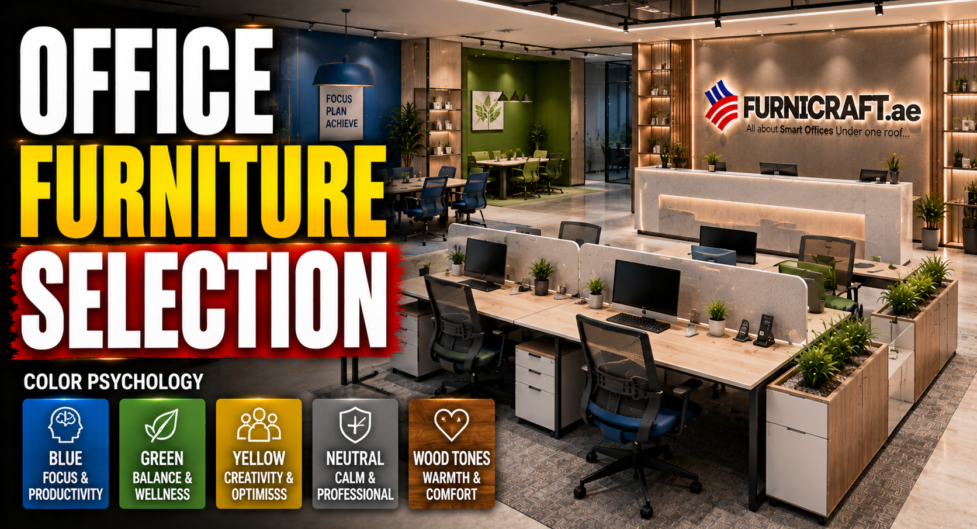
Office Furniture Selection becomes more effective when color psychology is considered alongside ergonomics, layout, materials, durability, and budget. Different colors create different emotional responses. Blue may support calmness and focus. Green can create balance and freshness. Yellow can add optimism and energy. Red can create urgency but should be used carefully. Neutral colors such as white, grey, beige, and black can help create a professional and timeless office base.
This article explains how color psychology affects Office Furniture Selection for workstations, chairs, desks, meeting tables, reception areas, executive offices, storage cabinets, collaborative zones, and relaxation spaces. It also covers Dubai office design needs, lighting, materials, common mistakes, expert recommendations, future trends, key takeaways, and FAQs.
The goal is simple: to help businesses choose office furniture colors that support people, productivity, and professional presentation. Whether you are planning a new office or upgrading an existing workspace, color should not be treated as decoration only. It should be part of a practical workplace strategy.
Why Office Furniture Selection and Color Psychology Matter
Office Furniture Selection matters because employees spend many hours surrounded by desks, chairs, tables, storage units, and wall finishes. These surfaces create the visual environment people work in every day. Color psychology matters because color can influence mood, comfort, attention, and perception.
A workplace with poor color choices may feel cold, stressful, or visually tiring. A workplace with balanced colors can feel organized, calm, and productive. This is especially important in Dubai, where offices often need to look modern, professional, premium, and visitor-ready.
Color can affect office spaces in several ways:
- It changes how large or small a room feels.
- It influences the mood of employees and visitors.
- It helps separate work zones visually.
- It strengthens company branding.
- It can make furniture feel more modern or more traditional.
- It supports focus, collaboration, privacy, or creativity depending on how it is used.
When businesses search for the Best office furniture in Dubai, they should not only ask whether the furniture is strong and stylish. They should also ask whether the color supports the purpose of the space. A meeting room, reception area, executive office, and collaborative zone should not always use the same visual tone.
Understanding Color Psychology in Office Furniture Selection
Color psychology is the study of how colors can influence emotions, behavior, and perception. In Office Furniture Selection, this means choosing furniture colors based on how each area of the office should feel and function.
For example, a finance team may need calm colors that support concentration. A creative team may benefit from brighter accents that encourage ideas. A reception area may need premium neutral tones that create trust. A collaborative zone may need energetic colors that support discussion.
Research on indoor environments has also explored how light and color can influence psychological mood in workplaces. For one external authority reference, a study indexed on PubMed examined whether indoor lighting and color have a systematic impact on the mood of people working indoors. Read the PubMed study here.
For practical office planning, color psychology should be combined with furniture quality, layout, employee comfort, and natural lighting. A color that works beautifully in one office may not work in another if the room size, lighting, flooring, or brand identity is different.
Warm Colors in Office Furniture Selection
Warm colors include red, orange, yellow, and related tones. These colors can create energy, movement, and warmth. They are useful in areas where the business wants to encourage creativity, communication, and activity. However, warm colors should be used carefully because too much intensity can become distracting.
Red for energy and urgency
Red is a powerful color. In Office Furniture Selection, it can be used for accents rather than large surfaces. A red chair, red decorative panel, or small red element in a brainstorming area can create energy. However, using too much red in desks, walls, or meeting rooms may feel overwhelming.
Red works better in:
- Creative corners
- Brand accent areas
- Informal discussion spaces
- Small decorative furniture elements
Orange for creativity and enthusiasm
Orange can make a workspace feel more social and active. It works well in collaborative zones, training areas, and informal meeting corners. Businesses using Collaborative Area furniture can add orange accents to create a more open and creative feeling.
Yellow for optimism and attention
Yellow is often linked with brightness, positivity, and alertness. In office furniture, yellow works best as an accent color. It can be used in lounge chairs, small stools, artwork, or decorative elements. Too much yellow can feel visually strong, so it should be balanced with neutral colors.
Cool Colors in Office Furniture Selection
Cool colors include blue, green, teal, and similar tones. These colors are often used to create calmness, focus, trust, and balance. In Office Furniture Selection, cool colors are useful for workstations, focus areas, meeting rooms, and employee seating zones.
Blue for focus and trust
Blue is one of the most common colors in professional office design because it can create a calm and focused environment. Blue can work well in employee work areas, meeting rooms, and client-facing spaces where trust matters.
Blue can be used in:
- Task chairs
- Meeting room accents
- Workstation dividers
- Brand-focused reception details
When choosing Office chairs in Dubai, blue fabric or blue accent stitching can help create a calm and professional look without making the office feel too plain.
Green for balance and freshness
Green is connected with nature, balance, and freshness. It is useful in offices that want a softer, more relaxed atmosphere. Green works well in wellness corners, quiet zones, lounge seating, and spaces where employees need visual relief.
Green can also be combined with plants, natural wood finishes, and soft lighting to create a more comfortable office environment. Businesses using Lounge Seating or Sofas Seating can use green accents to make waiting or break areas feel more inviting.
Teal and soft blue-green tones
Teal and blue-green tones are useful for modern offices because they feel calm but not boring. These colors can work well in Dubai offices that want a modern, premium, and fresh appearance. They pair well with grey, white, beige, black, wood, and metallic finishes.
Neutral Colors in Office Furniture Selection
Neutral colors are the foundation of many office interiors. White, grey, beige, black, brown, and wood tones can make a workspace feel clean, professional, and long-lasting. In Office Furniture Selection, neutral colors are especially useful for large furniture pieces because they are easier to match and less likely to feel outdated quickly.
White for openness and cleanliness
White furniture can make an office feel brighter and more spacious. It works well for compact offices, reception areas, meeting rooms, and modern workstations. However, white furniture should be chosen carefully because it may require more cleaning and maintenance.
Grey for balance and professionalism
Grey is one of the most practical colors for modern office furniture. It is neutral, calm, and easy to combine with other colors. Grey desks, chairs, dividers, and storage cabinets can create a stable base while allowing colorful accents to stand out.
For businesses planning Office Workstation layouts, grey can be a strong base color because it feels professional and works with many brand palettes.
Black for authority and sophistication
Black can create a premium and powerful look, especially in executive offices, meeting rooms, and high-end reception areas. A black Executive desk in Dubai or black metal chair frame can add authority. However, too much black can make a room feel heavy, so it should be balanced with lighter tones.
Wood tones for warmth
Wood finishes are important in Office Furniture Selection because they add warmth and comfort. Light wood can feel modern and soft. Dark wood can feel executive and premium. Wood finishes work especially well in reception desks, meeting tables, manager desks, and executive offices.
Matching Furniture Colors with Office Zones
Every office zone has a different purpose. That is why Office Furniture Selection should not use one color strategy everywhere. A color that works in a collaborative space may not be right for a focus area. A color that works in a reception area may not be suitable for employee workstations.
Employee workstation areas
Workstation areas should support focus, comfort, and daily productivity. Soft neutrals, grey, white, beige, light wood, blue accents, and green accents usually work well. These colors reduce visual stress and make the workspace easier to use for long hours.
Businesses can explore Office workation in Dubai options and choose colors that match the team’s work style. A quiet operations team may need softer tones, while a creative team may benefit from brighter accent colors.
Meeting rooms
Meeting rooms need colors that support communication and decision-making. A Meeting table in Dubai with a neutral or wood finish can create a professional base. Accent chairs or wall details can add energy without distracting from discussion.
For meeting room planning, businesses can also read Conference Layout Ideas and What Makes a High Quality Meeting Table.
Reception areas
Reception areas should feel welcoming, trustworthy, and aligned with the brand. A Reception desk in Dubai can use wood, white, black, beige, or marble-inspired finishes depending on the business style.
Visitor seating can include softer colors to create comfort. Sofas Seating, Lounge Seating, and Coffee Tables should match the reception desk and overall brand mood.
Executive offices
Executive offices usually need stable, premium, and confident colors. Dark wood, black, charcoal, beige, deep blue, and warm neutral tones can create authority. However, the space should still feel comfortable for meetings and daily leadership work.
An Executive desk in Dubai should be selected with color, size, material, and visitor seating in mind. The goal is to create leadership presence without making the room feel too heavy.
Collaboration zones
Collaboration zones can use more energetic colors. Orange, yellow, teal, green, or branded accent colors can help these areas feel more active. However, bright colors should be balanced with neutral desks, chairs, or flooring.
Collaborative Area furniture works best when it creates a clear difference from focused work zones while still matching the overall office design.
Quiet and privacy zones
Quiet zones should use calmer colors. Soft blue, green, grey, beige, and wood finishes can help create a more focused atmosphere. A Silent Box or private work area should feel peaceful, not visually loud.
The guide How to Balance Privacy and Collaboration at Work is useful for companies that want to manage focus and teamwork in one office.
Office Furniture Selection and Lighting
Lighting changes how furniture colors appear. A chair that looks bright in natural daylight may look darker under warm artificial lighting. A white desk may look clean in a bright office but dull in a poorly lit room. That is why Office Furniture Selection should always consider lighting.
Natural light can make colors feel softer and more accurate. Artificial lighting can make colors warmer, cooler, brighter, or flatter depending on the bulb type and placement. In Dubai offices with strong sunlight, light-colored furniture can help create brightness, but glare should be controlled.
Important lighting factors include:
- Amount of natural light
- Direction of sunlight
- Color temperature of artificial lights
- Reflection from furniture surfaces
- Screen glare
- Task lighting around desks
- Reception and meeting room lighting
Businesses can review Reception Lighting Ideas to understand how lighting and furniture design work together in visitor-facing spaces.
Office Furniture Selection and Material Color
Material is another important part of Office Furniture Selection. The same color can feel different depending on whether it appears on metal, wood, glass, leather, mesh, or fabric.
For example, black metal may feel sleek and modern, while black leather may feel executive and premium. Light wood may feel warm and natural, while white laminate may feel clean and minimal. Grey fabric may feel soft, while grey metal may feel industrial.
Common office furniture materials include:
- Wood finishes for warmth and stability
- Metal frames for strength and modern design
- Mesh materials for breathable seating
- Fabric upholstery for comfort and color variety
- Glass surfaces for openness and lightness
- Laminate finishes for durability and clean appearance
Businesses choosing Mesh Chairs In Dubai may prefer black, grey, blue, or neutral mesh tones depending on the office style. Businesses selecting Storage Cabinets may choose neutral finishes that blend into the room and reduce visual clutter.
For more guidance on durable furniture choices, the article The Benefits of Investing in Quality Office Furniture can support better buying decisions.
Using Color to Support Brand Identity
Office Furniture Selection should also reflect the company’s brand. Colors used in the office can support brand recognition, culture, and visitor perception. A law firm may prefer calm, serious, and premium tones. A tech startup may use brighter accents. A clinic may use soft and clean colors. A creative agency may use stronger contrast and more playful furniture elements.
Brand-based color planning may include:
- Using brand colors in accent chairs
- Choosing reception furniture that matches the company image
- Using neutral desks with branded wall details
- Adding color accents in collaboration areas
- Keeping executive offices aligned with company tone
Businesses planning client-facing areas can read Best Furniture for Client Facing Office Spaces. This can help connect brand presentation with reception, lounge, meeting, and executive furniture choices.
Color Psychology for Open Offices and Private Offices
Open offices and private offices need different color strategies. A strong Office Furniture Selection plan should understand how each environment is used.
Open offices
Open offices usually need colors that reduce visual noise. Too many bright colors can make the space feel busy. Neutral desks, soft chair tones, and limited accent colors often work best. Green or blue accents can support calmness, while orange or yellow can be used in small areas to add energy.
Open offices also need furniture that supports movement and focus. Businesses can review How Furniture Layout Affects Office Movement to understand how furniture placement affects daily office flow.
Private offices
Private offices can use deeper and more personal color choices because fewer people use the space. Executive rooms may use darker tones, warm wood, or refined neutrals. Manager offices may use balanced tones that feel approachable but professional.
Private offices should not feel too dark or closed. Lighter wall colors, balanced furniture finishes, and comfortable seating can help the room feel professional and usable.
Color Psychology for Conference Rooms and Negotiation Areas
Conference rooms and negotiation areas require careful color planning because they are used for decisions, discussions, presentations, interviews, and client conversations.
A conference room should feel focused but not cold. A neutral Meeting table in Dubai with comfortable chairs can create a professional base. Accent colors can be used in artwork, panels, chairs, or decorative elements.
For negotiation areas, colors should support comfort and communication. Very aggressive color schemes may create tension. Very dull colors may reduce energy. A balanced palette with warm neutrals, soft blues, wood tones, or green accents can create a better environment for conversations.
Businesses can also explore Modern Collaboration Starts With The Right Meeting Table In Dubai for more meeting-focused design support.
Color Psychology for Break Areas and Lounge Spaces
Break areas and lounge spaces should feel different from workstations. Employees need places where they can relax, reset, and return to work with more energy. Color helps create this separation.
Break areas can use warmer and fresher tones such as green, soft yellow, orange accents, beige, or natural wood. These colors can make the area feel more comfortable and less formal.
Furniture choices may include:
- Lounge Seating
- Sofas Seating
- Coffee Tables
- Informal chairs
- Small collaborative tables
The colors in break areas should still match the company’s overall design. A break zone can be more relaxed without looking disconnected from the rest of the office.
Common Color Mistakes in Office Furniture Selection
Many businesses make color-related mistakes during Office Furniture Selection. These mistakes can affect comfort, appearance, productivity, and brand image.
Using too many colors
Too many colors can make an office feel chaotic. It is better to choose a primary base color, one or two secondary colors, and limited accent colors.
Choosing colors without checking lighting
Colors can look different under office lighting. Always consider natural light and artificial lighting before finalizing furniture colors.
Ignoring employee comfort
A color may look attractive but feel tiring during long work hours. Employee areas should use colors that support focus and comfort.
Making every zone look the same
Different office areas need different moods. Workstations, reception spaces, meeting rooms, executive offices, and lounge areas should not all feel identical.
Using bold colors on large furniture pieces
Strong colors work best as accents. Large desks, storage cabinets, and meeting tables are often safer in neutral or wood finishes.
Ignoring brand identity
Furniture colors should support the company image. A mismatch between furniture colors and brand personality can weaken the office design.
For broader buying guidance, businesses can read Office Furniture Buying Mistakes to Avoid and The Only Checklist You Need for Buying Office Furniture UAE.
Expert Recommendations for Better Office Furniture Selection
Office Furniture Selection should combine color psychology with practical workplace needs. These expert recommendations can help businesses create better offices.
Start with the function of each space
Before choosing colors, decide what each area needs to do. Focus spaces need calm colors. Collaboration areas can use more energy. Reception areas need trust and professionalism.
Use neutral colors for large furniture
Large furniture pieces such as desks, workstations, cabinets, and meeting tables usually work better in neutral or wood tones. This keeps the office flexible and timeless.
Add brand colors as accents
Use brand colors in chairs, panels, accessories, lounge furniture, or decorative elements instead of making every large furniture piece bold.
Balance warm and cool tones
Warm colors add energy. Cool colors add calmness. A balanced office uses both carefully depending on the zone.
Consider materials and lighting together
Wood, metal, fabric, mesh, and glass all change how colors feel. Lighting also changes color appearance, so both should be reviewed together.
Plan for long-term flexibility
Trendy colors can look outdated quickly. Neutral furniture with changeable accents is often better for long-term value.
Businesses planning future-ready spaces can review Future Proof Office Furniture Buying Guide and Latest Office Furniture Innovations in Dubai.
Future Trends in Office Furniture Colors
Office Furniture Selection is becoming more connected to wellness, branding, sustainability, and flexible work. Color trends are moving away from random decoration and toward intentional design.
Important trends include:
- Soft neutral workstations with branded accents
- Natural wood tones for warmth
- Green and biophilic-inspired color palettes
- Matte black and charcoal for executive spaces
- Soft blue and teal tones for calm focus
- Warm beige and earthy tones for comfort
- Color-coded zones for better navigation
- Accent furniture in collaboration areas
Dubai offices are also becoming more premium and design-aware. Businesses want furniture that looks modern but does not become outdated quickly. This makes neutral bases and flexible accents a smart approach.
For future workplace design ideas, businesses can explore Modern Office Furniture in Dubai Redefining Workspace Design and AI-Powered Office Furniture Trends for 2025.
Related Furnicraft Resources
Explore these Furnicraft resources to support better Office Furniture Selection and workspace planning:
- Office furniture in Dubai
- Best office furniture in Dubai
- Modern office furniture in Dubai
- Office furniture stores in Dubai
- Office workation in Dubai
- Office Workstation
- Staff Desk
- Manager Desk
- Executive desk in Dubai
- Height Adjustable Desk
- Office chairs in Dubai
- Executive Chairs In Dubai
- Mesh Chairs In Dubai
- Reception desk in Dubai
- Meeting table in Dubai
- Training Tables
- Storage Cabinets
- Lounge Seating
- Sofas Seating
- Coffee Tables
- Collaborative Area
- Silent Box
- Office Furniture Guides
- Office Productivity & Design
- How Office Furniture Affects Employee Productivity
- Office Movement Layout
- Client Office Furniture
- Future Office Furniture
- Office Furniture UAE Buying Checklist
- Office Furniture Buying Mistakes
- Latest Office Furniture Innovations
- Modern Office Furniture in Dubai Redefining Workspace Design
Key Takeaways
- Office Furniture Selection should consider color psychology, not only price and appearance.
- Warm colors such as red, orange, and yellow can add energy but should be used carefully.
- Cool colors such as blue and green can support calmness, focus, and balance.
- Neutral colors such as white, grey, beige, black, and wood tones create a professional base.
- Workstations, meeting rooms, reception areas, executive offices, and lounge spaces need different color strategies.
- Lighting changes how furniture colors appear, so color choices should be checked under real office lighting.
- Materials such as wood, metal, mesh, fabric, and glass influence how colors feel.
- Brand colors work best as accents rather than overwhelming the entire office.
- Furnicraft provides office furniture solutions for Dubai businesses that want professional and practical workspace planning.
Conclusion
Office Furniture Selection becomes much stronger when color psychology is part of the decision. Colors affect how people feel, how they focus, how they communicate, and how they experience the office. A well-planned color strategy can make a workspace feel more productive, comfortable, professional, and aligned with the company brand.
The best approach is to choose neutral and durable furniture for major pieces, then use color accents strategically in collaboration zones, reception areas, lounge spaces, and brand-focused details. Workstation colors should support focus. Meeting room colors should support discussion. Reception colors should build trust. Executive office colors should communicate confidence. Break area colors should feel refreshing.
For businesses in Dubai, Furnicraft can help with practical Office furniture in Dubai, including Office Workstation layouts, Office chairs in Dubai, Meeting table in Dubai, Reception desk in Dubai, Executive desk in Dubai, and complete Modern office furniture in Dubai solutions for better Office Furniture Selection.
FAQs
What is the role of color psychology in Office Furniture Selection?
Color psychology helps businesses choose office furniture colors that support focus, creativity, comfort, brand image, and employee mood. It makes Office Furniture Selection more strategic and workplace-focused.
Which color is best for office furniture?
There is no single best color for every office. Neutral colors such as grey, white, beige, and wood tones are safe for large furniture, while blue, green, yellow, or orange can be used as accents depending on the office zone.
What colors are best for workstations?
Workstations usually work best with neutral colors, light wood, grey, white, blue accents, or green accents. These colors help create a calm and focused work environment.
Should office chairs be bright or neutral?
For most offices, neutral Office chairs in Dubai are easier to match and maintain. Bright chairs can work well in creative or collaborative zones when used carefully.
How does color affect meeting rooms?
Meeting room colors can influence discussion, focus, and professionalism. Neutral meeting tables with soft accent colors usually create a balanced meeting environment.
What colors work best for reception furniture?
Reception furniture should use professional and welcoming colors such as white, beige, wood, black, grey, or soft brand accents. A Reception desk in Dubai should match the brand and visitor experience.
Can color improve office productivity?
Color alone cannot guarantee productivity, but it can support better mood, comfort, focus, and workplace atmosphere when combined with ergonomic furniture, good lighting, and smart layout planning.
Where can I buy office furniture in Dubai?
You can explore Furnicraft for Office furniture in Dubai, including workstations, office chairs, meeting tables, reception desks, executive desks, storage cabinets, and modern office furniture solutions.
🔗 Follow Furnicraft for More Workspace Ideas
Stay inspired with real-life setups, workspace tips, and the latest product drops: